

Let’s have an honest conversation, breeder to future Maine Coon parent.
You’re about to bring home a kitten that you’ve invested a significant amount of money in. You’ve bought the fancy cat tree, the water fountain, the food I recommended, and probably a few toys your kitten will completely ignore in favor of the box their new litter box came in. And now I’m going to tell you to add one more thing to the list — pet insurance — and I want you to get it before your kitten ever sets a giant fluffy paw in your house.
I know. Nobody wakes up excited to buy insurance. Stick with me, because this might be the most important thing I ever tell you about kitten ownership.
Nobody Likes Paying for Insurance. I Get It.
Everyone hopes for a healthy Maine Coon. As much as we think they’re perfect – they’re not. At some point in their life, a health issue will arise.
Insurance is the one product we all buy hoping we never use. You pay every month, nothing happens, and you start wondering why you’re lighting money on fire. I understand the feeling completely. It’s the same with your car, your house, and your own health coverage.
I’ve been breeding Maine Coons for years, and I’ve heard both versions of that story from kitten owners. People who have insurance are always thankful. Those without it always regret it. An emergency visit can cost $5,000 to $10,000.
Recently, one of my pets (Chichi) was vomiting. What I expected to be a simple $250 vet visit turned into $1,200 after X-rays and a sonogram. Thankfully, nothing was wrong with her. But you can see how fast expenses can add up, even for a visit that results in nothing.

Health Issues and Emergencies to Consider
I send annual surveys and ask my kitten owners to report any health issues or incidents that the cat has had over the last year. While most reports are positive, there are certainly health scares, accidents, and chronic illnesses that occur.
Below is a list of some of the things that you may not necessarily think about happening, but certainly could. I’m not writing about these to instill fear, but to bring awareness that our pets aren’t perfect.
Swallowed objects. Maine Coons are notorious for eating things that are not food. Hair ties, ribbon, string, sewing thread, rubber bands, plastic, the ear off your kid’s stuffed animal. Linear foreign bodies (string-type items) are especially dangerous because they can saw through the intestines. This is usually an emergency surgery situation, and it commonly runs $2,000 to $5,000+.
Falls and fractures. Your kitten will climb things you didn’t know were climbable. A bad landing off a bookshelf or a tumble down the stairs can mean a fractured leg — think $1,500 to $4,000 for diagnostics, surgery, and follow-up care.
Toxic plants and household items. Lilies are deadly to cats. A single bite of a leaf or a lick of pollen can cause kidney failure. Then there’s human medication, essential oils, antifreeze, and that one houseplant you forgot to look up. Toxin ingestion often means hospitalization, IV fluids, and bloodwork: $1,000 to $4,000 depending on severity.
Urinary blockages. More common in males, and a true emergency — a blocked cat can pass away within 24 to 48 hours. Treatment involves catheterization and hospitalization, often $1,500 to $3,000, and more if surgery is needed.
Bite wounds, burns, broken teeth, corneal scratches from playing too rough with a sibling pet. The list goes on.
Entropion – This is a condition where the eyelid rolls inward and the lashes rub the cornea. It can be caused by an injury to the eye, a virus, and it can also be genetic. While uncommon, it’s more of a nuisance than a chronic issue. However, corrective surgery is the only way to remedy it. Surgery costs $500 – $750
Feline Infectious Peritonitis (FIP) is one of the most heartbreaking diseases in the cat world. It starts with feline coronavirus, a virus so widespread that most cats will be exposed at some point. In a small percentage of cats, though, that harmless virus mutates inside the body into FIP, triggering a devastating inflammatory disease. It most often strikes cats under two years old, and for decades a diagnosis was a death sentence. Cost to treat is about $1500.
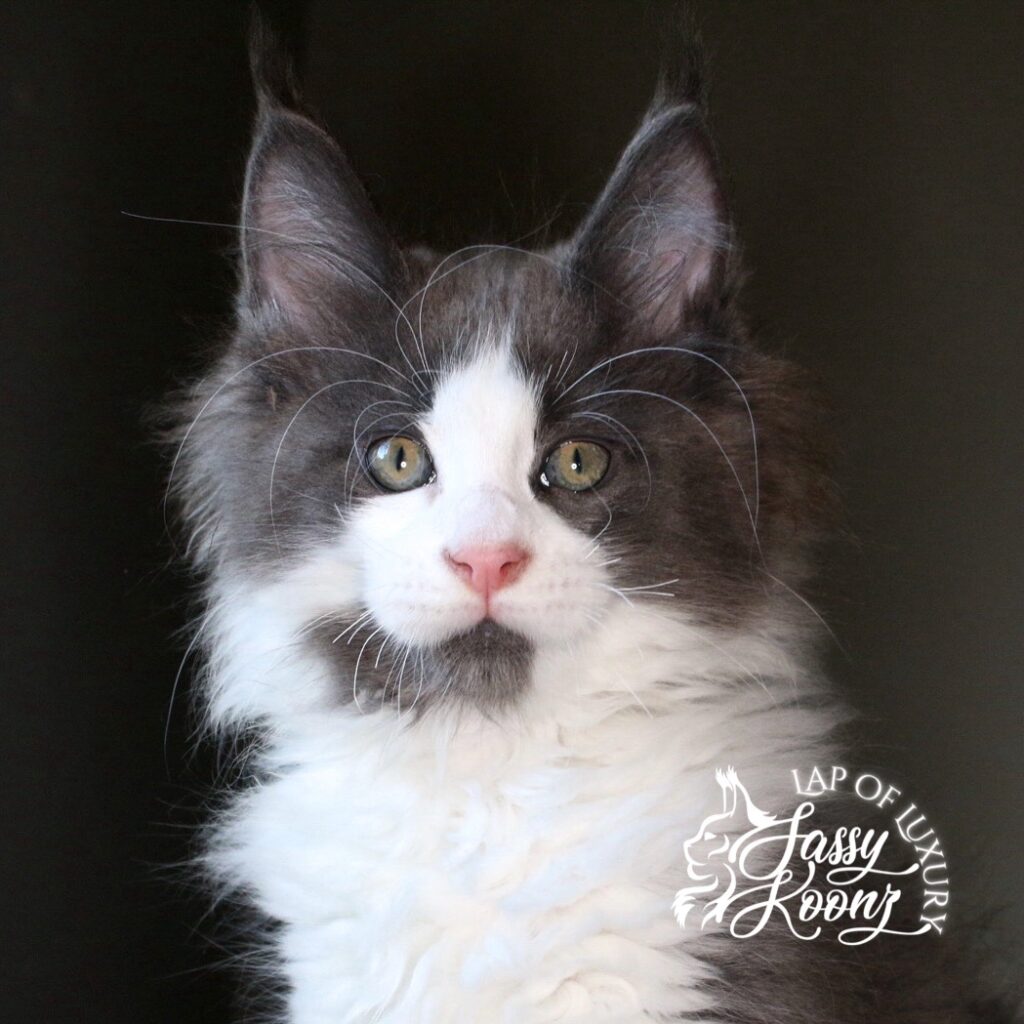
Maine Coon Specific Health Issues
I’m not going to sugarcoat this, because an educated owner is a prepared owner. We health test our breeding cats and do everything genetically possible to stack the deck in your kitten’s favor. But no breeder on this planet can hand you a written guarantee that a living creature will never get sick. Anyone who promises you that is selling something other than kittens.
Here are the conditions every Maine Coon owner should know about:
Hypertrophic Cardiomyopathy (HCM). This is the most common heart disease in all cats, and Maine Coons carry a known genetic predisposition for HCM. Breeders screen for the HCM gene mutation and do echocardiograms on breeding cats, but HCM can still develop spontaneously in any cat of any breed. Managing HCM means cardiology visits, echocardiograms ($500–$700 each), and daily medication for life. Over a cat’s lifetime, that adds up to thousands of dollars.
Hip Dysplasia. Maine Coons are big cats with big frames. Sometimes their hips don’t develop quite right. Mild cases are managed with joint supplements and weight control; severe cases can require surgery running $3,000 to $7,000 per hip.
Polycystic Kidney Disease and other kidney issues. Kidney disease is the quiet thief of senior cats across all breeds. Early detection and management means regular bloodwork, prescription diets, and sometimes fluid therapy — manageable, but not free.
Patellar luxation, periodontal disease, and everything else cats get. Maine Coons are still cats. Dental cleanings under anesthesia, extractions, GI issues, diabetes.
Is Pet Insurance Worth it? Here’s Some Math
Let’s do the math nobody wants to do. Pet insurance runs about $30 a month — $360 a year. A Maine Coon lives 12 to 15 years. So if you pay premiums for your cat’s entire life, that’s somewhere between $4,320 and $5,400. Sounds like a lot, right?
Most vets would tell you a typical indoor cat has somewhere between 1 and 3 genuine “drop everything” emergencies in its lifetime. Kittenhood (foreign objects, toxins) and senior years (urinary blockages, cardiac events, kidney crises) are the two danger zones. Let’s assume that your cat has 2 emergencies (i.e. swallowed hair tie, urinary blockage, heart scare) in its lifetime, and each emergency visit runs $4,500.
So here’s the real question: which risk would you rather carry? The guaranteed, predictable $30 a month spread painlessly over fifteen years? Or the unpredictable $4,500 bill that shows up whenever it feels like it, twice? You’re not paying $5,400 for insurance; you’re paying $30 a month for the certainty that you’ll never have to choose between your bank account and your cat.
Here’s what pet insurance actually costs versus what one bad day costs:
| Expense | Cost |
|---|---|
| Pet insurance for a kitten | ~$25–$45/month (Maine Coons run slightly higher than average because insurers know the breed) |
| One year of premiums | ~$300–$540 |
| Ten years of premiums | ~$3,600–$6,500 |
| Foreign body surgery | $2,000–$5,000 |
| Urinary blockage emergency | $1,500–$3,000 |
| Fracture repair | $1,500–$4,000 |
| HCM diagnosis + lifelong management | $5,000–$15,000+ over the cat’s life |
| Hip surgery | $3,000–$7,000 per hip |
| One overnight stay in an emergency hospital | $1,000–$3,000 before they’ve even treated anything |
One single emergency can cost more than several years of premiums. With a typical policy reimbursing 70–90% after your deductible, a $4,000 surgery might cost you $650 out of pocket instead of the full amount. And Maine Coons live 12 to 15+ years — that’s a lot of time for life to happen.
Could you get lucky and never file a claim? Absolutely. I genuinely hope you do. But “I’ll just save the money instead” only works if the emergency politely waits until year six of your savings plan.
The Pre-Existing Condition Clause: Why Timing Is Everything
Every single pet insurance company excludes pre-existing conditions. There is no carrier anywhere that will cover an illness or injury that showed symptoms before your coverage started (or during the waiting period). This is standard across the industry.
What does that mean practically?
- If your kitten has one episode of urinary trouble before you enroll, urinary issues may be excluded forever.
- If a vet notes a heart murmur at a checkup before your policy is active, good luck ever getting cardiac coverage.
- If your cat limps once and it goes in the medical record, orthopedic claims can get denied years later.
You cannot buy insurance after the diagnosis. That’s not how any insurance works, and pet insurance is no exception.
But flip it around: a healthy 12 week old kitten with a clean vet record is the single most insurable animal on Earth. Everything is coverable. Premiums are at their lowest. No exclusions.
This is exactly why I tell every Sassy Koonz family to have a policy activated the day your kitten comes home. Most policies have short waiting periods (a few days for accidents, a couple weeks for illness), so starting early means your kitten is fully covered before they’ve even finished exploring the house.
When you buy a Sassy Koonz kitten, we provide 30 days of pet insurance coverage at no charge to you. All you have to do is activate it within 24 hours when the kitten comes home.
What to Look For in a Policy
A quick cheat sheet so you’re comparing apples to apples:
- Accident AND illness coverage — accident only plans are cheaper for a reason. You want both.
- Hereditary and congenital condition coverage — non-negotiable for a pedigree cat. Confirm HCM and hip dysplasia aren’t excluded.
- Reimbursement rate — 80–90% is the sweet spot.
- Annual limit — I’d want $10,000+ or unlimited. A $2,500 cap disappears fast in an emergency room.
- Deductible — annual deductibles are usually friendlier than per incident ones.
- No payout caps per condition — chronic conditions like HCM need coverage that doesn’t run out.
Get quotes from at least three companies. Same kitten, wildly different prices — shopping around takes twenty minutes and can save you hundreds a year.
Here are some companies that offer pet insurance:
Here’s an article written by Forbes comparing different pet insurance companies. I encourage you to do some research, and choose the provider that you feel the most comfortable with. Even if you activate the free Sassy Koonz coverage with your kitten, you can take that time to shop around for another company if you’re not happy with the premiums offered by Trupanion.
The Bottom Line
I put years of health testing, careful pairings, and premium care into every kitten before they leave my cattery. Pet insurance is how you continue that protection for the next fifteen years. It’s not a bet that something will go wrong. It’s the guarantee that if something does, the only question you’ll ask the vet is “what does my cat need?” instead of “what can I afford?”
Nobody likes paying for insurance. But I promise you’ll like the alternative even less.
Frequently Asked Questions About Pet Insurance for Maine Coons
Do Maine Coons need pet insurance?
Yes. Maine Coons carry breed-specific risks like hypertrophic cardiomyopathy (HCM) and hip dysplasia, and even a perfectly healthy cat can rack up a ,000–,000 bill from one swallowed hair tie. Since no insurer covers pre-existing conditions, the only way to guarantee full coverage is to insure your kitten while their vet record is still squeaky clean.
How Much Does Pet insurance cost for a Maine Coon kitten?
Plan on roughly $25–$45 per month for a solid accident and illness policy. Maine Coons price slightly above the average cat because insurers know the breed. Your exact rate depends on your location, deductible, reimbursement rate, and annual limit, so get quotes from at least three companies.
When should I get pet insurance for my kitten?
You should get insurance the day your kitten comes home. Every policy has a waiting period (typically a few days for accidents, around two weeks for illness), and anything that shows symptoms before that window closes can be excluded as pre-existing forever. Some breeders (like Sassy Koonz) offer a free insurance policy that can be activated the day your kitten comes home.
What should a Maine Coon pet insurance policy include?
Accident and illness coverage, hereditary and congenital conditions explicitly included (confirm HCM and hip dysplasia aren’t excluded), an 80–90% reimbursement rate, and an annual limit of $10,000 or more. Chronic conditions like HCM need coverage that doesn’t cap out per condition.
Have questions about preparing for your Sassy Koonz kitten? Reach out anytime! Helping you start off right is literally my job.
Discover more from Sassy Koonz Maine Coon Cattery
Subscribe to get the latest posts sent to your email.


What a wonderful and informative article in this newsletter. At this time, I am treating a cat (not one of my MC) who has FIP. It’s very scary and the diagnosis took awhile as he had the dry neurologic form. Many other illnesses had to be ruled out. He was in serious condition when the diagnosis was made and that was after he lost use of both back legs. Well….fast forward to now. He’s been on GS-441524 now for a little over a month and a half. He still has a way to go with treatment. He’s doing wonderful. He’s eating and playing and doing everything a normal cat would do. He’s gained over three pounds and his back legs are fully recovered. He’s my miracle kitty and this treatment is a wonder drug. I expect after his treatment, he will be totally recovered and an FIP success story.
I am so glad your sharing this. Ty
Hello Tracy,
Would you mind if I share this on my blog? I’d of course give Sassy Koonz all the credit for the article — or just link it to you.
Thanks 🙂
Carolyn (Lynx Town MC)
Sure! Please just link it back to me Thank you 🙂
As Tracy and I discussed two weeks ago, I should have triggered this. I did all the genetic testing and cardiology stuff to make sure mine was genetically sound (she came from Tracy, so we know she is, but confirmed), only to be blindsided by an extremely rare congenital condition that no one could have foreseen. $16,400 later, I am wishing I had gotten the insurance as Tracy advised. But I had a healthy kitten and knew I’d be fine. Lesson to be learned: even when you know, you don’t know. But also, props to Tracy for breeding extremely healthy cats which made recovery for mine a breeze. My wallet still won’t talk to me, but I have my cat to console me.