

Welcome to our comprehensive guide on Maine Coon Characteristics. This is the ultimate resource for learning all of the wonderful traits of a Maine Coon cat before you buy a kitten. This page serves as the cornerstone of our in-depth series.
The Maine Coon is the original American cat. A naturally occurring breed that developed in the forests of New England over centuries before anyone thought to formalize it. The first recorded mention of Maine Coons as a distinct type appears in the 1860s, and the breed took Best in Show at the first major American cat show in Madison Square Garden in 1895. They nearly disappeared after the Persian became fashionable in the early 1900s, but devoted breeders preserved the line, and today the Maine Coon is consistently one of the most popular cat breeds in the world.
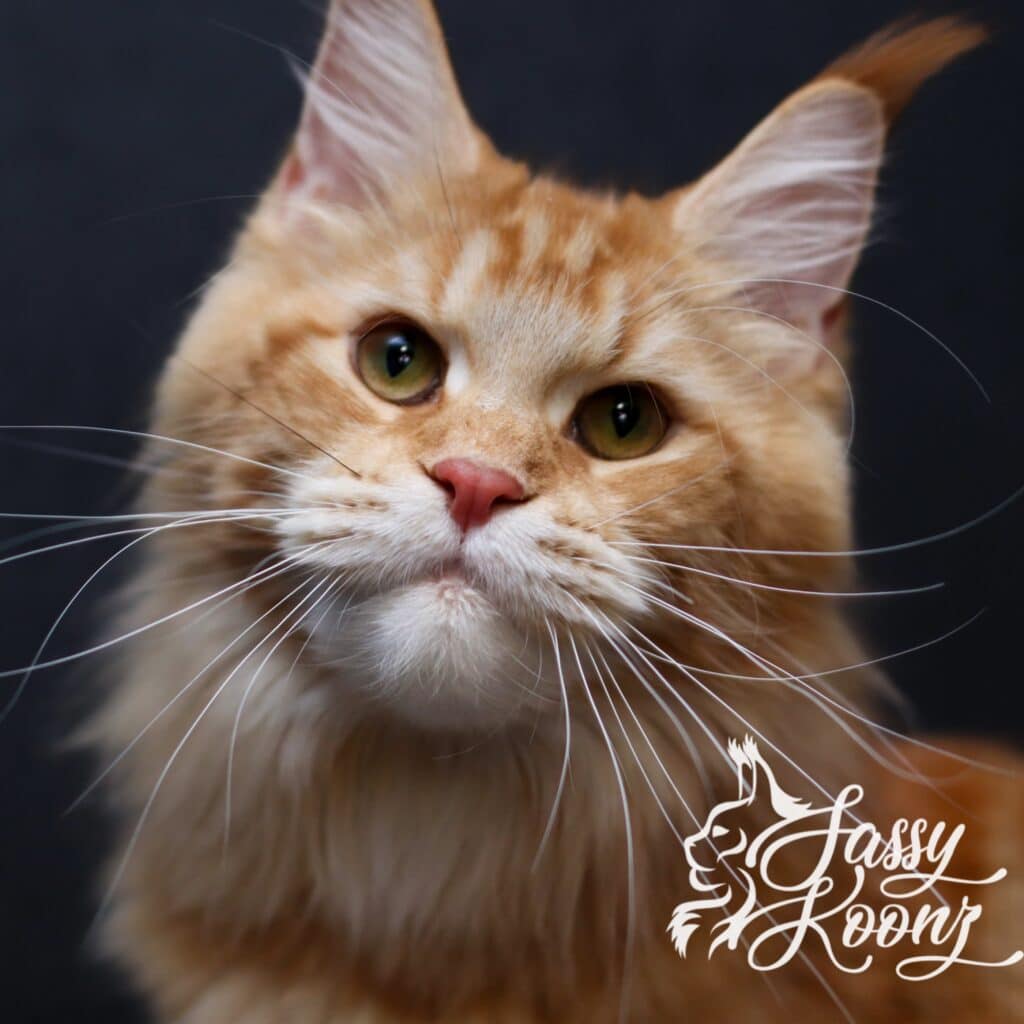
What makes them so enduringly popular isn’t hard to see. Maine Coons are impressively big. Adult males typically weigh between 20 and 25 pounds, with some reaching 30, and they can stretch up to 40 inches from nose to tail tip. They grow slowly, often not reaching full size until age three to five. But the size alone doesn’t explain the breed’s following. It’s the personality that earns them the nickname “the dog of the cat world.”
Maine Coons follow their people. They meet you at the door, supervise whatever you’re doing in the kitchen, and settle near you (rarely on you). They tend to prefer being beside you rather than smothering you. They play fetch. They learn their names and come when called. They get along with children, dogs, and other cats with a patience and good nature that’s genuinely unusual in a cat. They are also one of the quietest large breeds. Rather than a loud meow, they communicate with chirps, trills, and a soft, rolling mrrow that owners find completely charming.
Physically, they are unmistakable. Tufted lynx-tip ears, a massive plumed tail they wrap around themselves like a scarf, rectangular bodies built for movement, and a semi-long coat that’s dense enough to handle a Maine winter but surprisingly manageable. They come in over 85 recognized color and pattern combinations, from the classic brown tabby to silver smoke, white, blue, and orange.
At Sassy Koonz, we are a TICA-registered cattery based in Jacksonville, Florida, and we have raised Maine Coons long enough to say with confidence: no other breed reliably produces the combination of size and temperament that a well-bred Maine Coon does. We work with Maine Coons with a dedication to preserving the breed, as well as educating buyers about them.
Maine Coons At a Glance
| Origin | Maine, USA (19th century) |
| Size | Large – one of the biggest domestic cat breeds |
| Male weight | 20 – 25 lbs (some reach 30 lbs) |
| Female weight | 10- 15 pounds |
| Length | Up to 40 inches nose to tail |
| Lifespan | 12 to 15 years |
| Coat | Semi-long, water-resistant, 85+ recognized colors |
| Temperament | Gentle, playful, highly social “dog of the cat world” |
| Registry | TICA, CFA |
| Price Range in 2026 | $4,000 – $8,500 |
Physical Characteristics
There are many distinguishing physical features of the Maine Coon cat. The ones that really give them the “wow” factor are their size, build and presence.
Maine Coons aren’t just big—they’re giant. 🐾 These gentle giants can tip the scales up to 20 pounds, sometimes even more! Compared to your average house cat, they’re like the super-sized version, both in size and personality. It’s no wonder people often joke they accidentally brought home a small dog instead.
Check out our article about how big Maine Coons get and have a peek at the size guide chart while you’re there.
Polydactyl Paws: More Toes, More to Love!
Did you know that Maine Coons have a higher percentage of having extra toes than other cats? This unusual trait does not have any imminent danger. In fact, extra toes help these gentle giants gain better balance and agility. Especially in colder climates, some people claim that cats with 6 toes move more easily on snow. Plus, extra toes mean more of a cat to love!
The Lion Mane
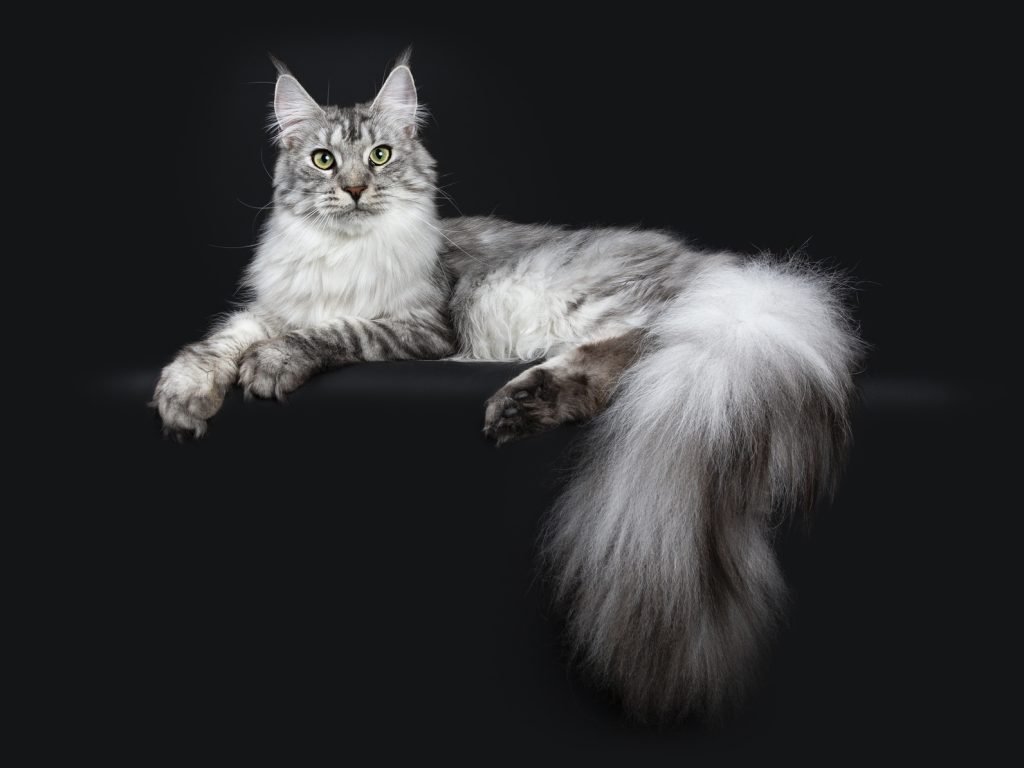
Part of the Maine Coon breed standard is to have a “frontal ruff” with age. If you have a Pedigree Maine Coon cat, you can expect to see the famous mane within a few years. It will be in all its glory.
Maine Coon coat development is different for each cat. Much of the Maine Coon coat development is linked to genetics. If one parent is from a “slow to mature” bloodline, the kitten will likely not develop its mane until it is three years old. You can look at photographs of your kitten’s parents. This will help you see the type of mane your kitten will inherit.
In the summer, Maine Coons will lose their heavy undercoat. This is referred to as “blowing their coat”. They will always grow it back in preparation of a cold winter. Queens/ nursing mothers can also blow their coats while they’re raising a litter of kittens.
During these times, the mane won’t be as apparent as it is when they’re wearing their winter outfit.
On average, your Maine Coon kitten will begin to get its adult coat at around 7 months of age. You’ll notice the texture and even the color begin to change once this transformation starts to take place. Around the age of 9 months old, you should start to see the mane develop. It may be just slightly visible at first. Over time, the mane will grow long and thick. Eventually, your Maine Coon will have a full necklace around his head.
Kitten Coat vs. Adult Coat
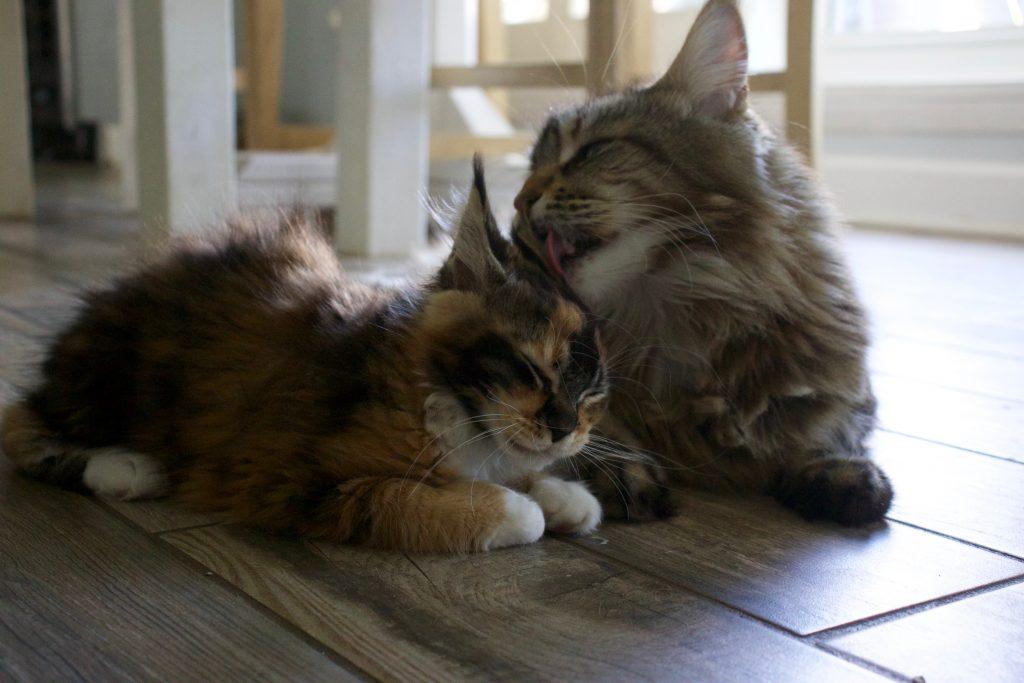
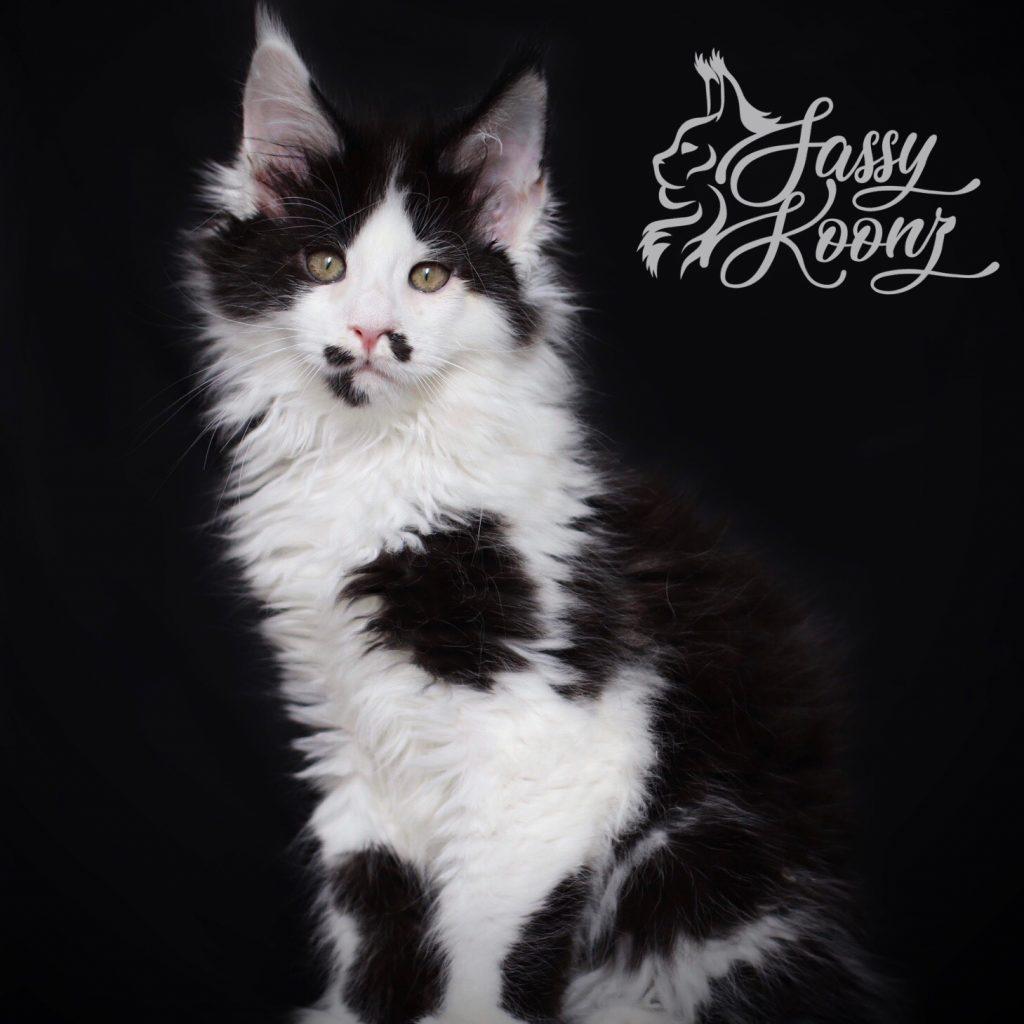
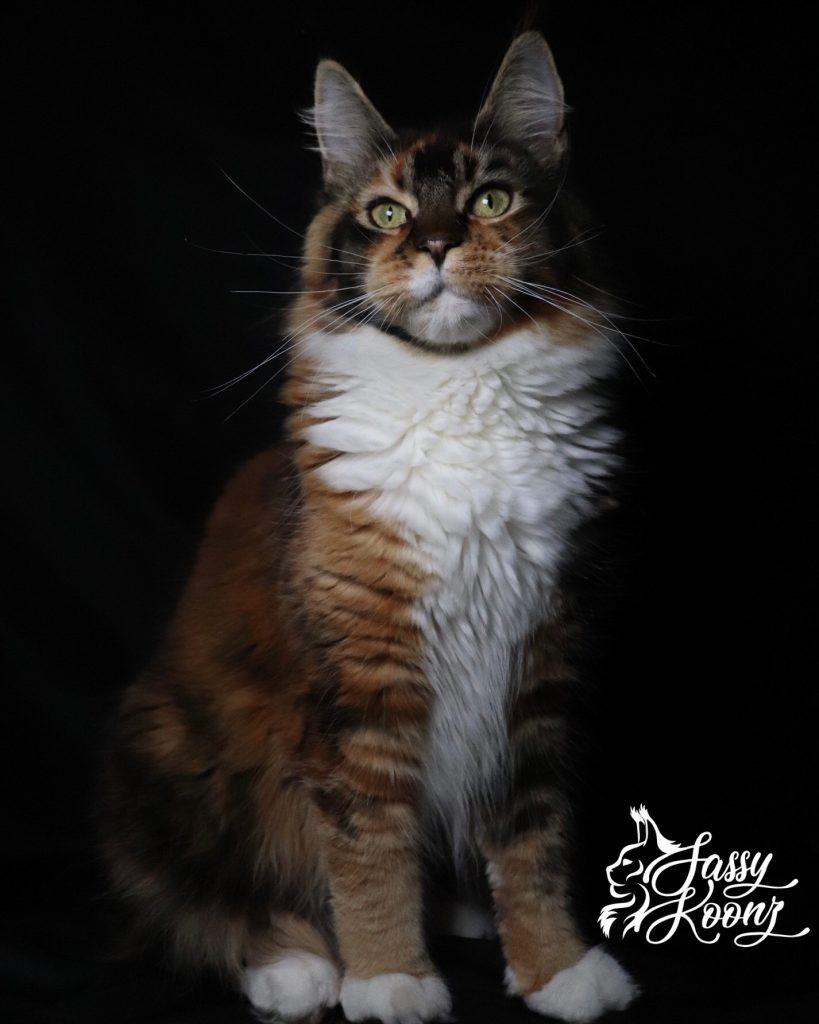
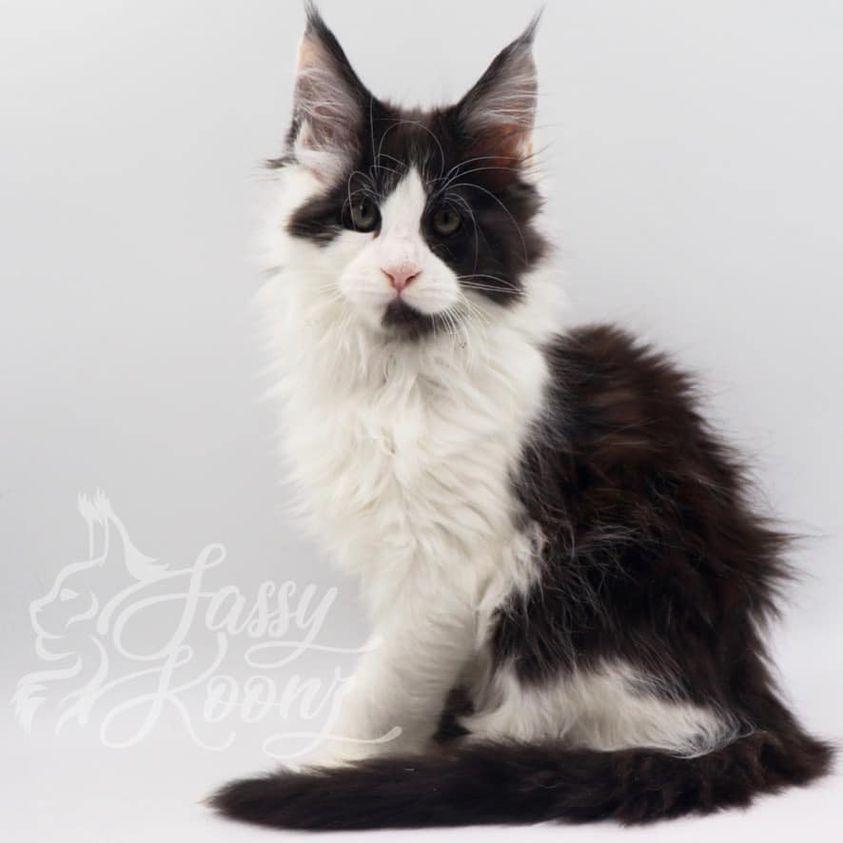
Here are some photographs of kittens at different stages of kitten life, next to their photos as older kittens. You’ll notice the difference in the appearance of the kitten with its baby coat. It appears distinct from the adult coat.



Temperament and Personality
Maine Coons are famous for their loving, playful personalities. Living with
one feels like living with a dog—they follow you, greet guests, play fetch,
and respond to their names. But every Maine Coon is unique. Some are calm,
others wild. All are gentle and loyal.
Maine Coon Breed Standard Guidelines
Maine Coons are nature’s masterpiece—rugged, elegant, and perfectly adapted for both the great outdoors and a cozy home.
GENERAL: originally a working cat, the Maine Coon is solid, rugged, and can endure a harsh climate. A distinctive characteristic is its smooth, shaggy coat. A well proportioned and balanced appearance with no part of the cat being exaggerated. Quality should never be sacrificed for size. With an essentially amiable disposition, it has adapted to varied environments.he Head
HEAD SHAPE: medium in width and slightly longer in length than width with a squareness to the muzzle. Allowance should be made for broadening in older studs. Cheekbones are high.
MUZZLE/CHIN: is visibly square, medium in length and blunt ended when viewed in profile. It may give the appearance of being a rectangle but should not be tapering or pointed. The length and width of the muzzle should be proportionate to the rest of the head. It should present a pleasant, balanced appearance. The chin should be strong, firm and in line with the upper lip and nose. When viewed in profile the chin depth should be observable and give the impression of a square, 90-degree angle. A chin lacking in depth, i.e. one that tapers from the jaw line to the lip, is not considered strong, firm or desirable.
PROFILE: It should be proportionate to the overall length of the head. There should be a slight concavity when viewed in profile. The profile should be relatively smooth and free of pronounced bumps and/or humps. A profile that is straight from the brow line to the tip of the nose is not acceptable. The profile must not show signs of having a “break” or “stop.”
EARS: Shape: large, well-tufted, wide at base, tapering to appear pointed. Set: approximately one ear’s width apart at the base; not flared.
EYES: large, expressive, wide set with an opened oval shape. Slightly oblique setting with slant toward outer base of ear.
BODY SHAPE: muscular, broad-chested. Size medium to large. Females generally are smaller than males. The body should be long. All parts should be in proportion to create a well-balanced rectangular appearance. No part of the anatomy should be so exaggerated as to foster weakness. Allowance should be made for slow maturation.
LEGS and FEET: legs substantial, wide set, of medium length, and in proportion to the body. Forelegs are straight. Back legs are straight when viewed from behind. Paws large, round, well-tufted. Five toes in front; four in back.
TAIL: One of the most striking features of the Maine Coon is its long tail. It is luxurious and bushy. It is truly a masterpiece of nature! It should be long, wide at base, and tapering. Fur long and flowing.
COAT: The Maine Coon coat is heavy and shaggy; shorter on the shoulders and longer on the stomach and britches. It’s also water proof and silky to the touch. You can find Maine Coons in 85+ recongnized color combinations.
PENALIZE: a coat that is short or overall even.
DISQUALIFY: delicate bone structure. Undershot chin, i.e. the front teeth (incisors) of the lower jaw overlap the front teeth of the upper jaw. They also project beyond the front teeth of the upper jaw when the mouth is closed. Crossed eyes. Kinked tail. Incorrect number of toes. White buttons, white lockets, or white spots. Cats showing evidence of hybridization resulting in the colors chocolate, lavender, or the Himalayan pattern.
EYE COLOR: Eye color can be shades of green, gold, green-gold or copper. White cats and all cats with white may have blue or odd eyes
POLYDACTYL: Polydactyl Maine Coons are allowed in TICA, but not in CFA.
NOTE: European Maine Coons may carry some features that are bit more exotic or wild looking. Regardless of type, the Maine Coon should be well balance with no one feature overpowering the next.
How to Tell If Your Cat is a Maine Coon
Even if your cat has many Maine Coon traits, looks alone won’t confirm pedigree status. The only way to 100% verify a cat as a purebred Maine Coon is through official pedigree documentation.
Without a pedigree, your cat may have Maine Coon ancestry, but there’s no way to prove it. If you’re looking for a verified Maine Coon, always work with a trusted, ethical breeder who provides proper documentation!
The Only Surefire Way to Verify Pedigree:
A 4+ generation pedigree listing only Maine Coon cats in the lineage.
Registration with a recognized cat association (TICA, CFA, FIFe, etc.).
Official registration papers from a reputable breeder.
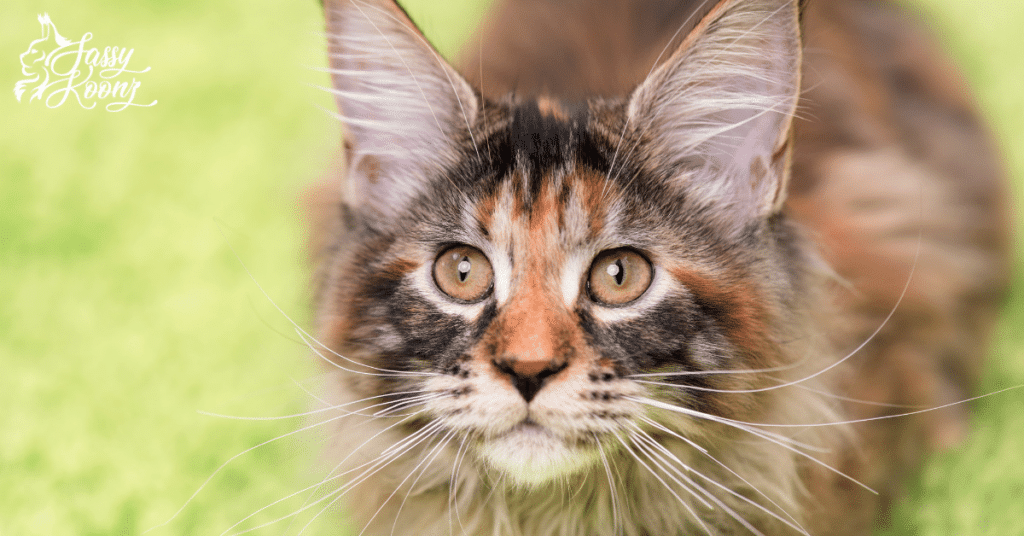
One of the biggest misconceptions about Maine Coons is that they must have an “M” on their forehead. Some even believe it stands for “Maine Coon.” This is simply not true! The “M” marking is a characteristic of the tabby pattern, not a breed trait. Tabby patterns are found in many cat breeds. This includes mixed-breed (moggie) cats. The marking can vary in visibility from cat to cat.The “M” is part of a tabby coat pattern, not a breed identifier. Any tabby-patterned cat—regardless of breed—can have it.If you’re determining if a cat is a true Pedigree Maine Coon, don’t rely on an “M” on the forehead. Look for verified lineage and breed standards instead!
Maine Coon vs. Other Breeds
Before I decided to have Maine Coon cats as pets, I did research on other breeds. Comparing other contenders was eye-opening. This led me down a one-way road to Maine Coons.
You may have a few other pedigree cats under consideration, like the Ragdoll or the Norweigan Forest Cat. Along with the Maine Coon, these cats also grow to be large, friendly pets. Here’s a breakdown comparisons of both breeds so you can see for yourself.
Are You Ready to Bring One Home?
Now that you know what makes Maine Coons special, discover how to find, prepare for, and care for your own gentle giant.
Discover more from Sassy Koonz Maine Coon Cattery
Subscribe to get the latest posts sent to your email.


