

Are you looking for Maine Coon grooming tips? You are not alone! It’s something you don’t consider much. That is, until you have the Maine Coon in your home. One of the most distinguishing attributes of a Maine Coon is their luxurious coat. You’ll read online that the coat of a Maine Coon is “low maintenance.” Some say it doesn’t require a lot of brushing. That’s just simply not true.
There are different types of coats on a Maine Coon. There are those that are very silky and smooth. This keeps Maine Coon fur matting to a minimum. Some are thick and dense and require a lot of upkeep. Then there are those that have “cottony” coats. Those guys have the highest level of maintenance.
Types of Maine Coon Coats
Their coat type can influence how much fur ends up floating around your home. Genetics play a role here. Some bloodlines naturally produce thicker, more maintenance-heavy coats.
- Silky, smooth coats: Easier to manage, slightly less prone to heavy matting
- Dense, greasy coats: Can tangle and mat more easily, may shed more if not properly groomed
- Cottony: Thick like wool, tangles and mats easily, high maintenance. May need to be shaved every 9 to 12 months.
Regardless of coat type, shedding is inevitable. And whether your Maine Coon is grooming himself (hello, hairballs!) or you’re brushing him, loose hair will be part of your life.
Does your Maine Coon need a bath?
Cats are self-sufficient animals, but does your Maine Coon need a bath? You’d think they might because of their long shaggy coats and extra fur on their toes. Let’s explore some facts about the Maine Coon cat and discover the reasons he may need to get bubbly.
Maine Coon cats are generally known for their long, thick coats. In addition to being long and thick, their fur is also a little oily. This allows them to repel water. It’s pretty fascinating.
The idea of having an oily coat may suggest that your Maine Coon needs a bath. However, that’s not the case at all. This breed keeps itself very clean, going through meticulous grooming rituals several times per day. Some breeders and enthusiasts that show their Maine Coons use unique products. These products ‘degrease’ the cat and temporarily remove the oils from the coat. If your Maine Coon is excessively oily, that may be indicative of a skin condition that needs veterinary attention.
Reasons to Bathe Your Maine Coon Cat
- If your Maine Coon is an excessive shedder, then a thorough shampoo is beneficial. Follow this with a blow dry and comb out to remove excess fur. This can help prevent hairballs. If your cat fits this description, then a quarterly bath might help.
- Did your Maine Coon get poop in his britches? (This is extra long fur found near the butt and on the back of their legs). Occasionally, you’ll find surprises hidden in the fur that requires shampoo. Diarrhea can also warrant a good bath and blow dry.
- If your Maine Coon gets into something he shouldn’t have (mud, dirt, etc). then bathing him will help bring his coat back to its natural beautiful condition.
How Often to Bathe (Kitten vs. Adult)
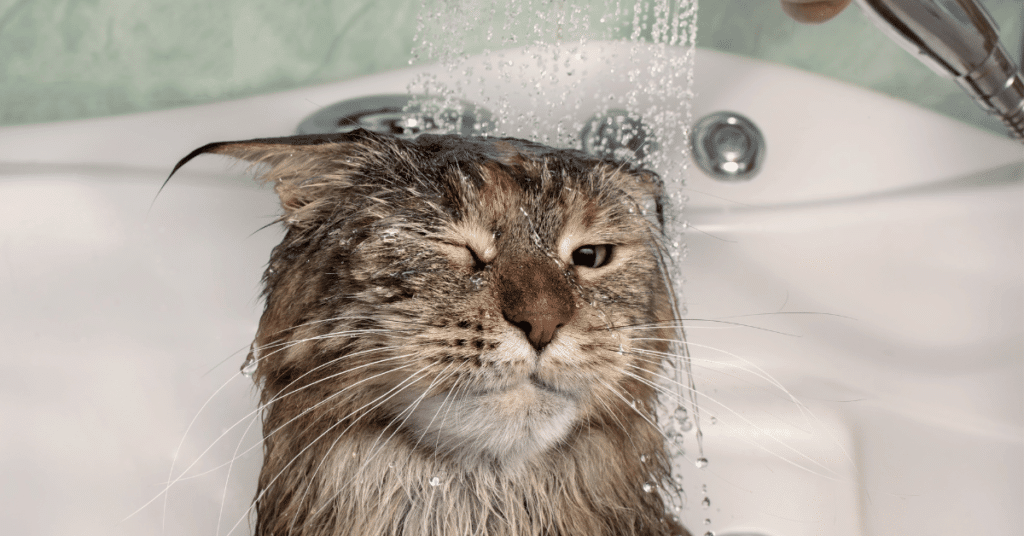
Start giving your Maine Coon baths and blow dries when they’re young. A regular schedule would be about once a month. This helps get them used to being in the sink or tub and getting wet.
As the cat gets older, you can extend the length of time between baths. As an adult, if your cat has a thick greasy coat, then shampoo and blow-dry it once every other month. This method will work wonders. This will keep their coats squeaky clean and help remove loose hairs. This will be particularly helpful in the summer months when Maine Coon shedding kicks up a notch.
Regular baths aren’t necessary, but there are circumstances when your Maine Coon can benefit from a bath. When bathing your cat, be sure to use cat-specific shampoos and conditioners. Products that are made for humans can irritate the skin of your cat, and even cause allergic reactions.
Regular Brushing and Combing
Instead of regular baths, consider regular combing and brushing of your Maine Coon cat. By offering regular grooming sessions, it helps to remove excess fur as well as distributes the oil throughout the fur. Reducing the number of tangles is a great preventative measure for mats.
It’s always best to remove the tangled hair early. This prevents the knots from getting tight. If they do, a shave might be necessary.
Shaving a Maine Coon: Pros and Cons
Is it ok to shave a Maine Coon cat? Maine Coon Cats, known for their luxurious coats and self-grooming habits, often evoke a sense of curiosity regarding shaving. Many pet owners consider shaving their cats for various reasons, from health concerns to style preferences.
This article explores the rationale behind a shaved Maine Coon. It examines its pros and cons. It also discusses the different haircut styles available for your feline friend.
Below is a video demonstrating a Maine Coon getting a lion cut.
Why Maine Coon Owners Shave Their Cats
Just like other topics having to do with cats, shaving a cat is a controversial one. Educating yourself about the potential reasons for giving a cat a haircut may offer some enlightenment.
- Medical reasons: Shaving a cat’s fur is sometimes necessary due to underlying health issues. For instance, severe matting can cause skin irritation and discomfort, leading to a need for shaving. Additionally, certain skin conditions and allergies may require shaving for proper treatment and medication application.
- Heat management: In warmer climates, owners may shave their cats. This helps them stay relaxed and comfortable during the hotter months. This can be especially beneficial for long-haired breeds prone to overheating.
- Grooming and Hygiene: Maine Coons with difficulty grooming themselves due to obesity, arthritis, or other health concerns may benefit from a shorter coat. Shaving can make it easier for these cats to maintain cleanliness and avoid matting.
- Allergy management: Some owners may shave their cats to reduce shedding and alleviate allergy symptoms. However, this is generally not an effective long-term solution, as dander and saliva are the primary allergens.
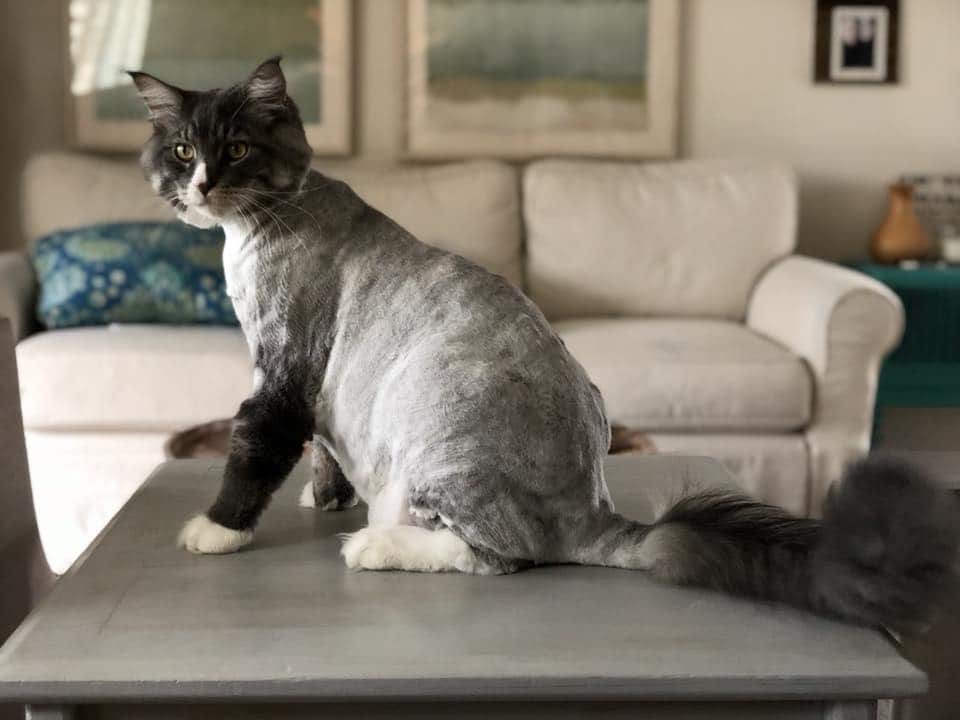
I only have one shaved Maine Coon cat, and that’s Biggie (pictured above). The only reason for his being shaved is grooming and hygiene. My mobile groomer gives him a day at the salon every six months.
He could be better at grooming himself – perhaps because he’s chubby. That’s another blog post, though. 🙂 As long as he leaves chocolate starfish stains on my furniture and pillow, he’ll continue to get his baths and bi-annual haircuts.
Don’t worry about Big, though; he loves getting a haircut. He acts like he’s Superman cat, walking around with his chest bowed out.
Pros of Shaving your Maine Coon:
- Improved hygiene: Shaving can make it easier for Maine Coons with grooming challenges to stay clean and prevent matting.
- Reduced Hairballs: Less fur means fewer hairballs, which can benefit you and your cat. You can also try Laxatone or organic coconut oil for your cat as an alternative to shaving.
- Comfort: A shorter coat can help cats stay cool in hot weather, reducing the risk of overheating.
- More accessible medication application: For cats with skin conditions, shaving may facilitate the application of topical medications.
Cons of Shaving Your Maine Coon
- Risk of injury: Shaving a cat requires skill and care to avoid injuring the skin. Inexperienced owners should seek professional help from a cat groomer to minimize the risk of cuts and irritation.
- Altered insulation: A cat’s fur protects against heat and cold. Shaving can make a cat more susceptible to temperature fluctuations, potentially causing discomfort or illness.
- Regrowth discomfort: As the fur regrows, it may cause itchiness or irritation for the cat, leading to excessive scratching and possible skin damage. If you do decide to shave your kitty, be mindful of any signs of discomfort.
- Loss of natural protection: A cat’s fur provides natural protection against the sun and parasites. Shaving may increase the risk of sunburn and flea or tick infestations.
- Skin irritation: Shaving can sometimes cause skin irritation or worsen pre-existing conditions, so it’s essential to consult your veterinarian before shaving your cat. Skin irritation can also come from getting “nicked” by the clippers.
- Altered behavior: Shaved cats may become more self-conscious or anxious due to the change in appearance, leading to altered behavior.
I had an owner contact me about her 1.5-year-old Maine Coon. His behavior had changed recently, and not for the better. While he is typically laid back and docile, he was lashing out at her, swatting her legs when she passed, and acting upset overall.
We ran through different scenarios that might be causing him this added stress. We ran through every change he had been through recently: new people, construction of the house, children, etc. She casually mentioned taking him to the groomer and getting him a new lion cut. She thought he would be cooler since the summer months were approaching.
When I heard this, I knew immediately that his new “hairdo” was the reason for his stress and abnormal behavior. He was NOT happy about being lion cut. We devised a plan to reduce the stress levels with some Feliway diffusers and calming treats. The best remedy in this case was time, and to let his fur grow back some.
After a couple of weeks, I followed up with her. She said he had calmed down and was back to being himself. She decided to never get her boy a haircut again.
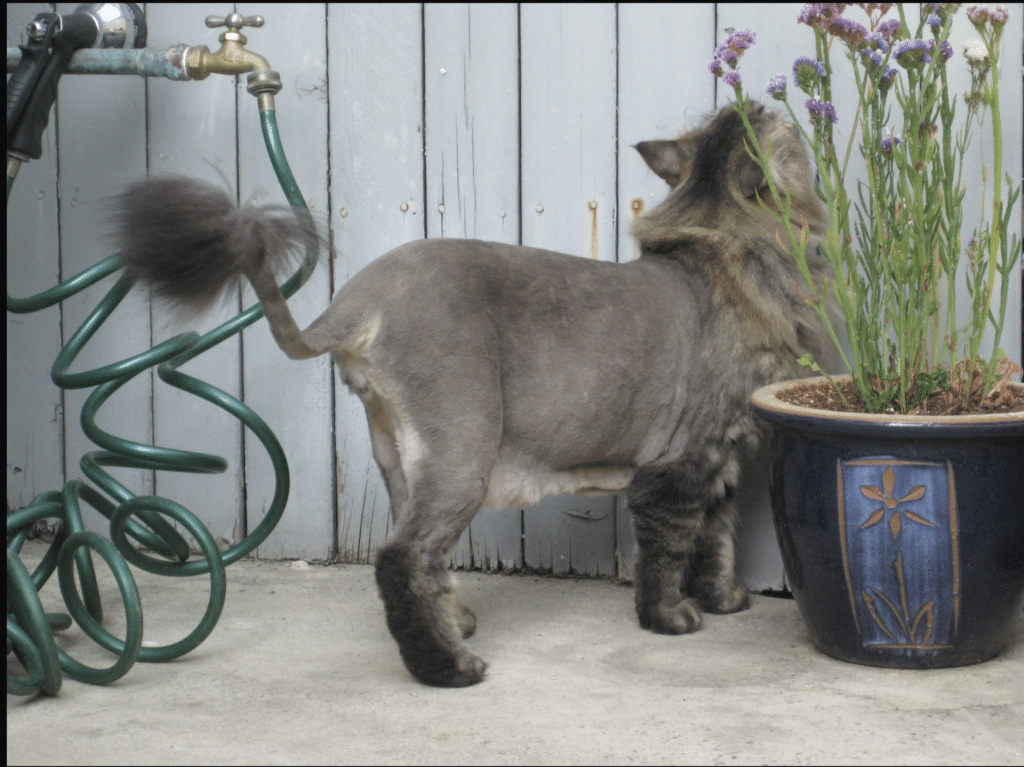
- Lion Cut: This is one of the most popular styles. The lion cut involves shaving the body fur. The cut leaves a mane around the head, a tuft on the tail, and sometimes boots on the legs. This style is both functional and fashionable.
- Comb Cut: A comb cut is a less drastic alternative to the lion cut. The fur is trimmed with a comb attachment. It leaves the fur shorter but not completely shaved. This style retains more of the cat’s natural insulation. This might be good for your Maine Coon getting his first hair cut.
- Teddy Bear Cut: In this style, the fur is trimmed to a uniform length all over the body. This gives the cat a plush, teddy bear-like appearance. This cut maintains some insulation while reducing shedding.
Preventing Hairballs
Hairballs form when your cat ingests loose fur during self-grooming. Normally, most of this fur passes through the digestive system. However, when a cat swallows excessive amounts of fur, the situation changes. This is particularly true for long-haired breeds like Maine Coons. The fur can accumulate in the stomach. This forms a hairball that eventually gets vomited up.
Signs that your Maine Coon has a Hairball
- Diarrhea or constipation
Frequent retching or gagging without producing anything - Vomiting cylindrical-shaped fur masses
- Loss of appetite
- Lethargy or discomfort
Hairball Prevention Strategies for Maine Coons
Preventing hairballs isn’t just about reducing the icky surprises—it’s about keeping your cat comfortable and ensuring a smooth digestive process. Regular baths and grooming helps remove loose shedding fur before your cat swallows it. If mats get too out of hand, then shaving your cat might be necessary.
Why Do Maine Coons Shed?
Just like humans naturally lose hundreds of hairs daily, shedding is a normal and necessary process for cats. It allows them to get rid of dead, loose hair and make room for new, healthy growth. You’ll notice an increase in shedding in the spring and summer, as they lose their thicker winter coat. Pro tip: Invest in lint rollers… lots of them!
If you’re living with a Maine Coon, you’ve probably already noticed:
- Tumbleweeds of silky fur rolling across your hardwood floors
- A constant supply of hair on your furniture
- Cat fur stuck to your clothes
Regardless of coat type, shedding is inevitable. And whether your Maine Coon is grooming himself (hello, hairballs!) or you’re brushing him, loose hair will be part of your life.
How to Reduce Shedding in Your Maine Coon
While you can’t stop shedding entirely (wishful thinking!), you can absolutely reduce it. At the end of the day, shedding comes with the territory when you live with a Maine Coon. Their coat is part of their charm—and with a little effort, you can keep shedding under control.
Feed a Healthy Diet
A high-quality diet rich in Omega-3 and Omega-6 fatty acids is essential for maintaining a healthy, shiny coat. A proper diet ensures your Maine Coon stays at a healthy weight. This keeps their overall health in top condition, including their skin and fur.
Shiny coat = less dry, brittle fur = less shedding!
Regular Grooming ️
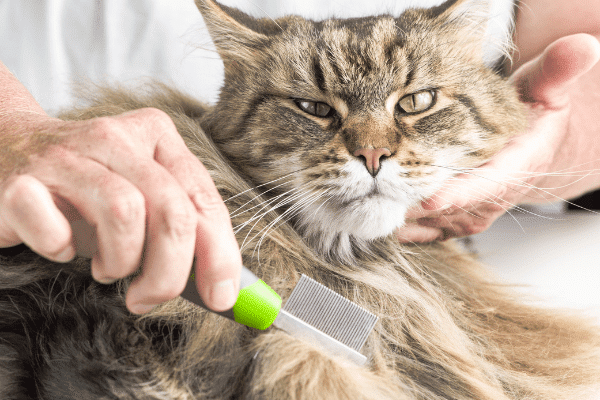
Some Maine Coons LOVE being brushed. Make it part of your bonding time. Brush your Maine Coon at least a few times per week.
- Removes loose, dead hair before it ends up on your couch
- Reduces the number of hairballs (bonus!)
- Keeps mats and tangles at bay
Use Deshedding Gloves
Between brushings, deshedding gloves are lifesavers. Just slip one on and pet your cat—simple! Bonus use: These gloves are also fantastic for cleaning fur off:
- Cat trees
- Furniture
- Rugs, curtains, and bedding
Keep Stress Levels Low
Did you know stress can contribute to excessive shedding? Stress triggers over-grooming, hair loss, and even health issues like diarrhea or respiratory flare-ups.
Stress in cats can be triggered by various factors. Moving into a new home can cause stress. Other pets, children, or even a chair being moved in the living room can also be stressors. Understanding what stresses cats out is important for a cat owner. You’ll manage to understand your furry friend better and help it cope.
Frequently Asked Questions About Grooming a Maine Coon
Do Maine Coons have greasy coats?
Yes. Some Maine Coons have a coat that is more oily in texture than others. This is known to be present to protect them from the elements of the weather, both rain and snow. You may notice that water seems to roll right off their back. Using a degreasing shampoo can remove this temporarily.
What is the best brush for a Maine Coon?
A stainless steel wide-tooth comb is the most effective tool for working through a Maine Coon’s dense, layered coat. A slicker brush works well for surface grooming. It is great for removing loose fur. A dematting comb is essential for breaking up tangles. This should be done before they tighten into full mats. Avoid cheap plastic brushes — they don’t reach the undercoat and can cause static.
How often should you brush a Maine Coon?
Maine Coons should be brushed at least 2 to 3 times per week, and daily during heavy shedding seasons. Cats with cottony or dense coats may need daily brushing to prevent mats from forming. Start a brushing routine early. Ideally, begin when they are kittens. This helps your Maine Coon accept grooming as a normal part of life. It is something they will not resist.
How do you prevent mats in a Maine Coon’s coat?
Consistent brushing is the only real way to prevent mats. Once a mat tightens close to the skin, brushing alone won’t remove it safely. Work through the coat in sections, starting from the ends and working toward the root. Pay extra attention to the areas behind the ears, under the armpits, and around the collar. Mats form fastest in these places. A detangling spray can help loosen minor tangles before they set.
Is it OK to shave a Maine Coon cat?
Giving your Maine Coon a shave is not the solution for all cats. It shouldn’t be something that you do without cause or reason. If you discover that your cat doesn’t like it, then there’s usually an alternative solution. If you do choose to shave your Maine Coon, find a professional cat groomer with experience.
Can you use coconut oil on a Maine Coon’s coat?
Coconut oil can be used sparingly as a natural coat conditioner for Maine Coons. Work a small amount through the fingertips into the fur to add shine. This can help loosen minor tangles. However, it should be used in very small amounts since cats groom themselves and will ingest it. Too much can cause digestive upset.
Can Omega-3 Fish Oil Help Prevent Hairballs in Cats?
Absolutely! Omega-3 fish oil is a simple, natural supplement that can actually help reduce hairballs in your cat. Always choose a cat-specific fish oil supplement (no human fish oils!) and follow the dosage instructions.
Discover more from Sassy Koonz Maine Coon Cattery
Subscribe to get the latest posts sent to your email.


Thank you for all the very helpful information. Ruka (Izzy) attacks the comb every time I try to comb her. I try to catch her when she’s cat napping so she’s not in such a playful mood but it doesn’t work most of the time. How do you use the treats to help in the grooming?
I have a question: My 14 month old MC is having problems with her coat. She has started scratching around her neck and has pulled out much of the longer hair around her neck. She has a cottony coat and it seems she has also become somewhat compulsive about grooming, which se is doing non-stop. I’m not sure what the problem is…Overwhelmed with all the new fur??? Stressed?
Vet prescribed a medicated shampoo and 2x week bath for a month. She’s gonna hate it. Any advice?
My first inclination is stress. Also Could be allergies.
I am glad I found your site. It’s really informative. I am picking up my first Maine Coon kitten today from a rescue. I have done lots of research but always pleased to find new information.
I already groom my 3 dogs, (Cockerpoo, Zuchio ln & Poodle Schnauzer cross) so have all the kit. They have lived with cats before so it should be great welcoming our new member of the family to our home.