

If I had to describe Maine Coons in one sentence, it would be this: They’re the bridge between a cat and a dog. Additionally, after nearly a decade with Maine Coons, I’m confident their personality equals their size. However, some breeders focus on looks. We prioritize temperament because a beautiful Maine Coon with a terrible personality is just a pretty cat.
Living with a Maine Coon
Indeed, it feels like living with a dog. They follow you everywhere. Your Maine Coon will supervise whatever you’re doing. Whether it’s cooking dinner, working at your desk, or folding laundry. So, they just want to be where you are.
They greet your guests. Forget hiding under the bed when company arrives. Most Maine Coons will meet your visitors at the door with curiosity and friendliness. Some will even jump on the couch to participate in the conversation. They’re social butterflies.
They crave attention (but on their terms). Unlike some breeds, Maine Coons aren’t typically lap sitters who demand constant petting. But they do want to be included. They want to know what’s happening. They want to participate in family life.
They’re playful (for life). Even as adults, Maine Coons retain kitten-like energy and curiosity. This is one reason they need enrichment and play.
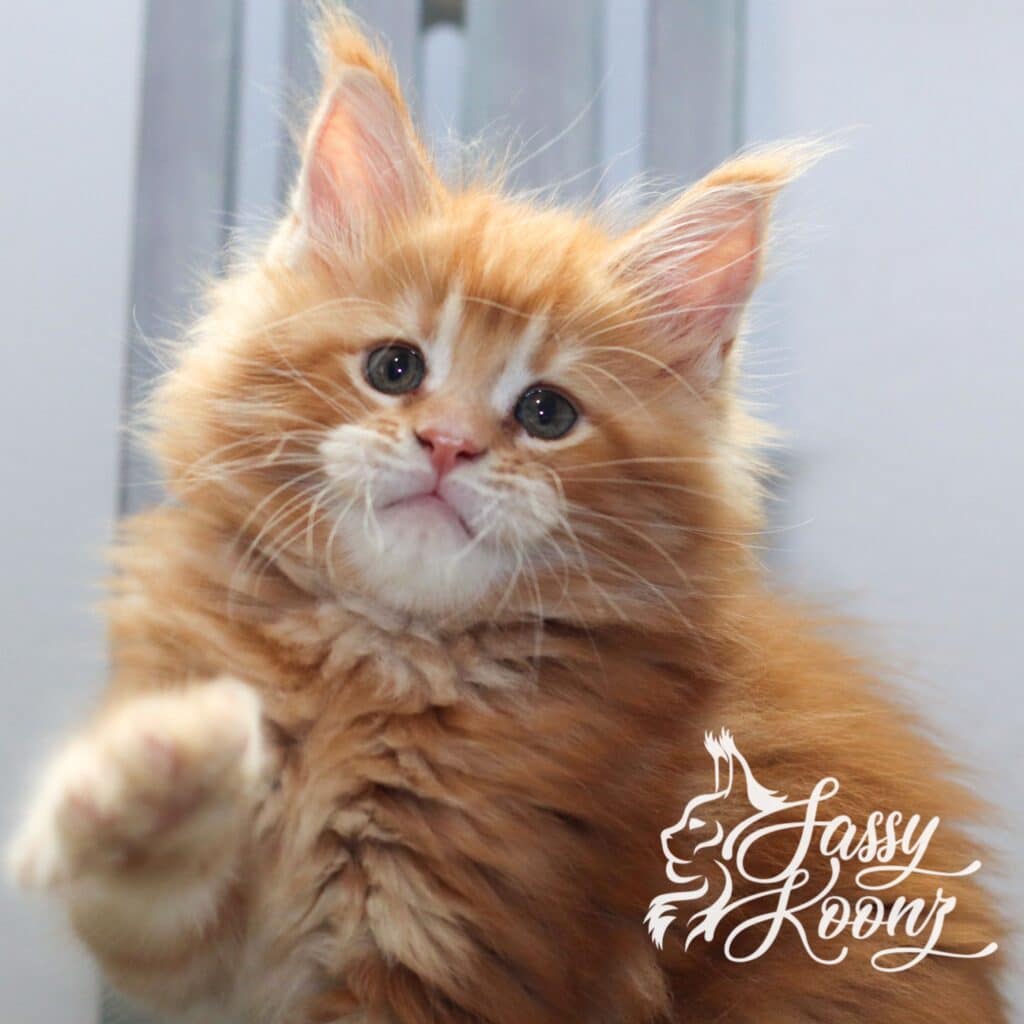
How Maine Coons Interact with People
The Maine Coon temperament is a breed trait, not a personality quirk. They are fundamentally people-oriented. It’s in their DNA. I’ve never met a Maine Coon that didn’t like people. Some are more reserved than others, but even the “shy” ones warm up quickly and seek out human interaction.
The key difference from other cats? They actually respond to you. Call their name, and they come. Ask them to get down, and many will comply. Invite them to play, and they’re ready. This responsiveness is part of what earns them the “dog of the cat world” nickname.
This breed is a social kitty. They may get upset if separated from their humans. Their anxiety can increase when apart for more than 24 hours. It’s important to realize and understand their communication efforts. Make the necessary plans if you’re going to be away from your cat.
Maine Coons with Children
Maine Coons are often called “gentle giants,” and for good reason. Despite their size—adult males can weigh 20-25 pounds. They’re remarkably patient and gentle with children. I’ve seen three-year-olds and six-month-old Maine Coons grow up together, with the kitten maturing into a massive adult that somehow knows not to hurt the tiny human.
They’re tolerant and forgiving. Kids can be rough. They pull tails, grab ears, and don’t always understand boundaries. Maine Coons, as a breed, handle this with grace. Rather than scratch or bite, they’ll walk away or simply tolerate the handling. This doesn’t mean they have no limits—they do—but their threshold for patience is higher than most breeds.
They’re loyal playmates. Maine Coons grow up with kids, and often become their best friends. They’ll play chase games, sit for “tea parties,” and be a constant companion through childhood adventures.
One caveat: Teach your children to be gentle. While Maine Coons are forgiving, teaching kids to respect the cat’s boundaries creates a healthier relationship. Show them how to pet gently, not grab by the tail, and to give the cat space when needed.
Getting Along with Dogs & Other Pets
One of the best things about Maine Coons? They get along with almost everyone. I’ve seen hundreds of interactions between Maine Coons and other cats. I’ve also observed the bonds that form once my kittens go to their new homes. They meet other pets in the family and form connections. I have never seen a true conflict between a Maine Coon cat and another cat or dog. It may take them a couple of days to adjust, but everyone gets along and lives happily ever after.
With dogs: Maine Coons usually do exceptionally well with dogs. Some Maine Coons act more like dogs themselves—they’ll play fetch, follow their owners around, and even “pack” with a dog companion. The key is proper introduction. Bring them together slowly, let them sniff and investigate, and supervise initial interactions. Teaching your dog not to chase the cat ensures harmony.
With other cats: Maine Coons are usually social with other felines. They don’t typically exhibit the territorial aggression you might see in other breeds. Many Maine Coons actually prefer having another cat in the home—they’ll groom each other, nap together, and play.
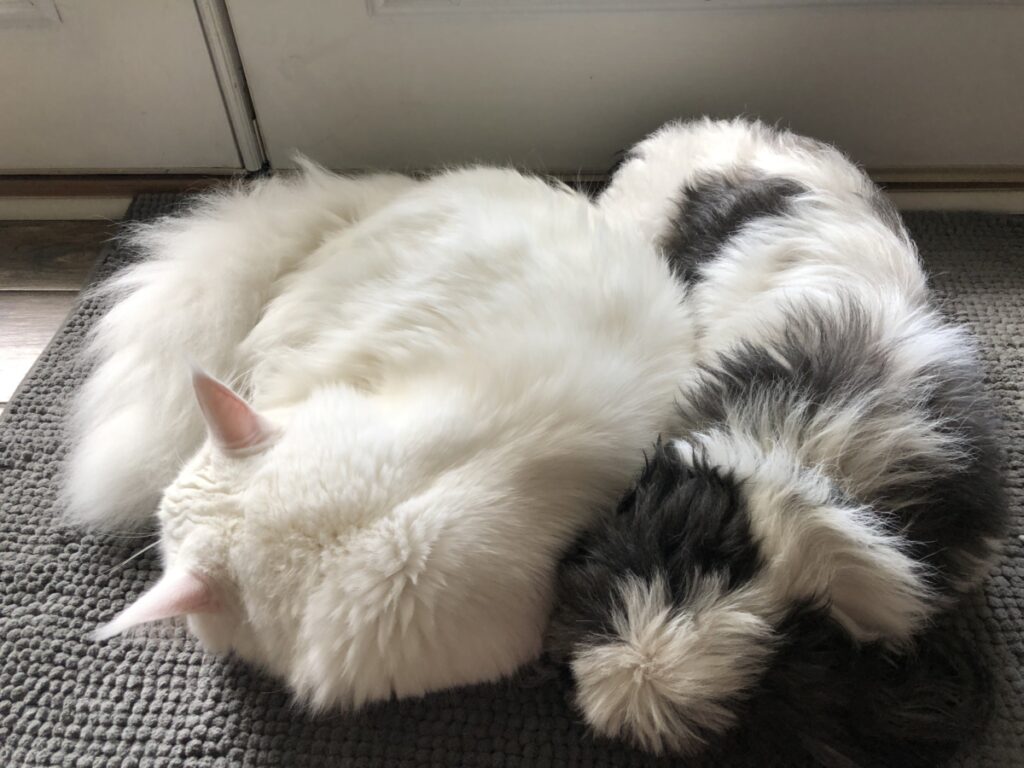
Maine Coon Cats and Their Love of Water
It’s been rumored that Maine Coon cats like water so I’ve performed some Maine Coon water tests. How true can this be? By nature cats don’t usually like the water, right? There are always those weirdo cats that seem to like it. Some will even go swimming!
For the sake of validating this argument, I’ve decided to put a few of my Maine Coons to the test and see if they really DO like water!
Cat # 1 – Finlay
Let’s start with Finlay. He’s my oldest Maine Coon cat. There’s something unique about Finlay. He has a sensitive tummy. You see, if he eats anything out of the ordinary [like DELI ROAST BEEF], he gets diarrhea. Nothing makes me fall to my knees and want to cry more than a kitty with diarrhea.
I made the mistake of giving him a new human treat once, and he got the Hershey squirts. It’s gross, I know. But these are the facts. I thought if I locked him in the bathroom eventually he would lick himself clean. That’s what most cats do, right? Well, not him! He just sat on the toilet seat waiting for the poop to dry. He even took a nap!
Time to test the waters!
I started by filling up the kitchen sink with warm soapy water hoping that he’d be accepting of this since there was no running water. As soon as I tried to lower him into the sink, he turned into the devil. His eyes became as big as saucers and his claws came out. As he was vigorously struggling to get out of there [and I was trying to calm him] he stuck his claws in my chest.
I shouted to my husband to come to help me! I was currently wrangling a 20-pound Maine Coon cat. He ran to the rescue and got Finlay off of me, uncurling his claws from my chest.
This didn’t help the fact that he still had massive amounts of poopy in his britches. Dan [my hub] came up with a great solution! We filled the bathtub up with warm sudsy water and put Finlay in the bathtub with the glass doors shut. Man, was he mad! However, from him jumping up and down frantically trying to escape, he successfully agitated all of the stinky poop from his backside.
When Dan felt like he was all clean, he opened the shower doors and we all ran. And for this reason, I am VERY careful about what Finlay gets for treats. NO MORE DELI ROAST BEEF.
CONCLUSION: FINLAY DOES NOT LIKE WATER
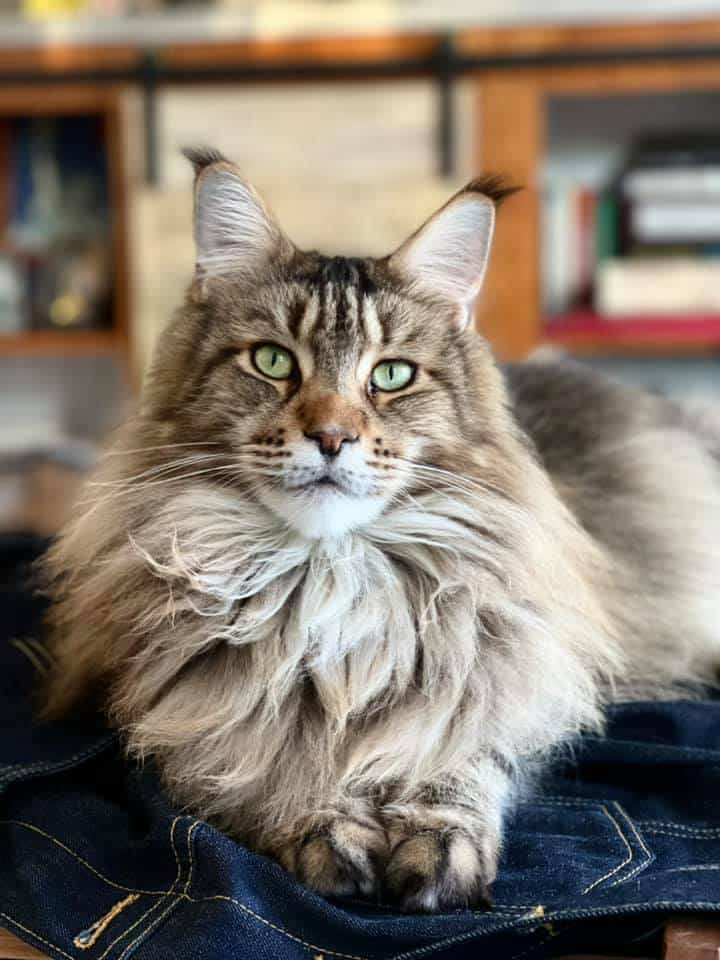
Cat #2 – Omega
Next up is Omega. He’s my white Maine Coon. He is very calm and relaxed. Not much bothers Meggers, and he gets along extremely well with any cat that crosses his path. At a whopping 30 pounds at 3 years old, he is my gentle giant. The abominable snowman, if you will.
Omega has been to the cat shows more than once as a Neuter (Premiere class). This means that he has seen some pretty detailed grooming days. Lucky for me, he was easy to bathe and groom. I was even able to get in the bathtub with him and be his rubber ducky.
bath time was a success. What about the running water test?
Conclusion: Omega likes water!
Cat # 3 Headhunter
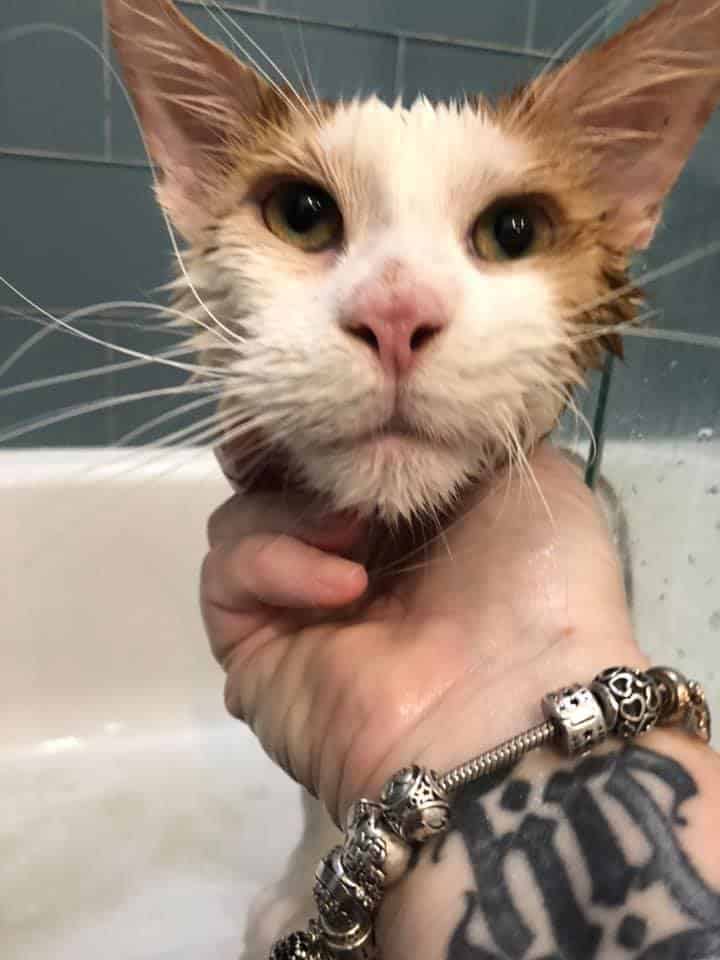
Headhunter is the Former Sire in the Sassy Koonz Cattery. He has done a fairly decent job keeping himself clean and groomed. Around the age of 12 months, he started to develop a stud tail. This is a condition that intact males get that causes the base of their tails to get greasy.
Recently, I put our good friend Headhunter to the water test. I filled the bathtub up with warm water and some fresh-smelling kitty shampoo. After putting him in the tub, I realized that he was very tolerant of the water and the experience so yes, I got in the tub with him. It’s just easier to wash and rinse the cat when I’m in there with him. I wanted to wash him a couple of times to make sure I got his tail nice and clean.
He did great in the bathtub! He even sat for a blow-dry and brushed after the bath.
Conclusion: Headhunter the Maine Coon likes water!
Why Do Maine Coons Chirp & Trill?
One of the most charming traits of a Maine Coon is their unique vocalization. Unlike typical cat meows, Maine Coons have a soft, high-pitched voice that produces chirps, trills, and that signature rolling “mrrow.” Owners consistently say it’s one of their favorite things about the breed—it just sounds cute.
They use chirps to “talk” with their humans. This is a method of expression and affection. When your Maine Coon chirps at you, they’re saying hello, expressing interest, or just making conversation. It’s their language.
They chirp when hunting toys or watching birds. This express excitement. Watch a Maine Coon see a bird outside the window—they’ll chirp, chatter, and make hunting sounds. It’s instinctual, playful, and adorable.
They may chirp to attract a mate or signal interest. For intact males and females, chirping serves a breeding function. If you have an unneutered Maine Coon, you’ll notice increased vocalization during mating season.
Your Maine Coon chirping is a good thing. It means they’re comfortable, engaged, and happy. Some people worry their Maine Coon is unhappy because they don’t meow like traditional cats. Nope—the chirping is their normal vocalization. Embrace it.
Playfulness & Hunting Instinct
Unlike some breeds that are content to lounge all day, Maine Coons have an active hunting instinct and need mental and physical stimulation. They were originally working cats in Maine, hunting rodents in barns and forests. That drive is still in their DNA.
Provide enrichment. Toys, climbing structures, puzzle feeders, and window perches are essential. A Maine Coon without enrichment can become destructive—they’ll knock things off shelves, shred curtains, or find other ways to amuse themselves.
Play with them. Many Maine Coons will play fetch, chase string toys, or engage in interactive games. Schedule 15-30 minutes of active play daily, especially with kittens and young adults.
Supervise small pets. If you have hamsters, rats, or birds, your Maine Coon will notice them. The predatory instinct is real. Secure small pets in areas the cat can’t access.
Accept the hunting gifts. Some Maine Coons are very good hunters (especially if they have outdoor access). If your cat presents you with a “gift,” say thanks and dispose of it. This is their way of providing for the family.
Intelligence & Trainability
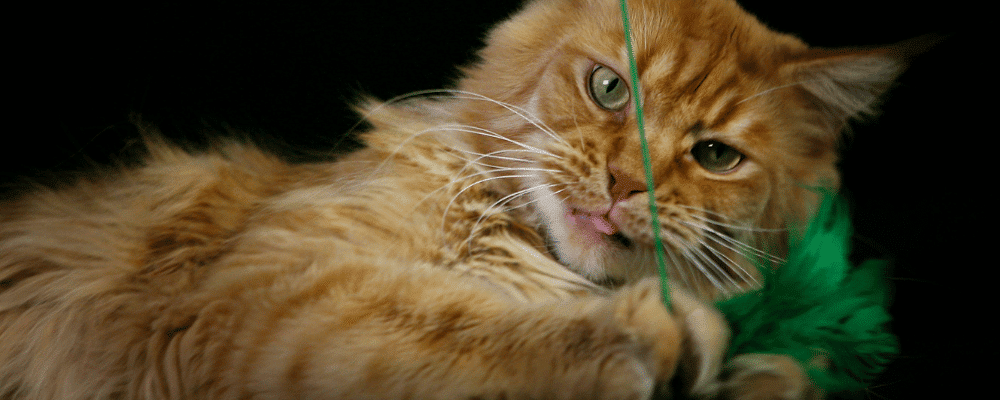
Maine Coons are among the most intelligent domestic cat breeds. They can learn their names, respond to commands, play fetch, and follow complex instructions. Food motivation makes them exceptionally trainable—many respond well to clicker training or treat-based rewards.
Some things Maine Coons can learn:
- Come when called
- Sit or high-five
- Walk on a harness and leash
- Use the toilet (yes, really)
- Open doors
- Play fetch
- Respond to verbal cues
This intelligence is a double-edged sword. On the plus side, they’re problem-solvers and learners. On the minus side, they can figure out how to open cupboards, knock things off shelves strategically, and generally outsmart their humans.
Toys that provide enrichment are excellent choices for your Maine Coon.
Are Maine Coons Lap Cats?
Snuggling is a form of emotional connection. Science even backs it up. Cuddling with a cat can lower stress levels, reduce anxiety, and even lower blood pressure. Maine Coons, with their affectionate nature, make excellent companions. But whether or not they’ll be full-on lap cats depends on several factors.
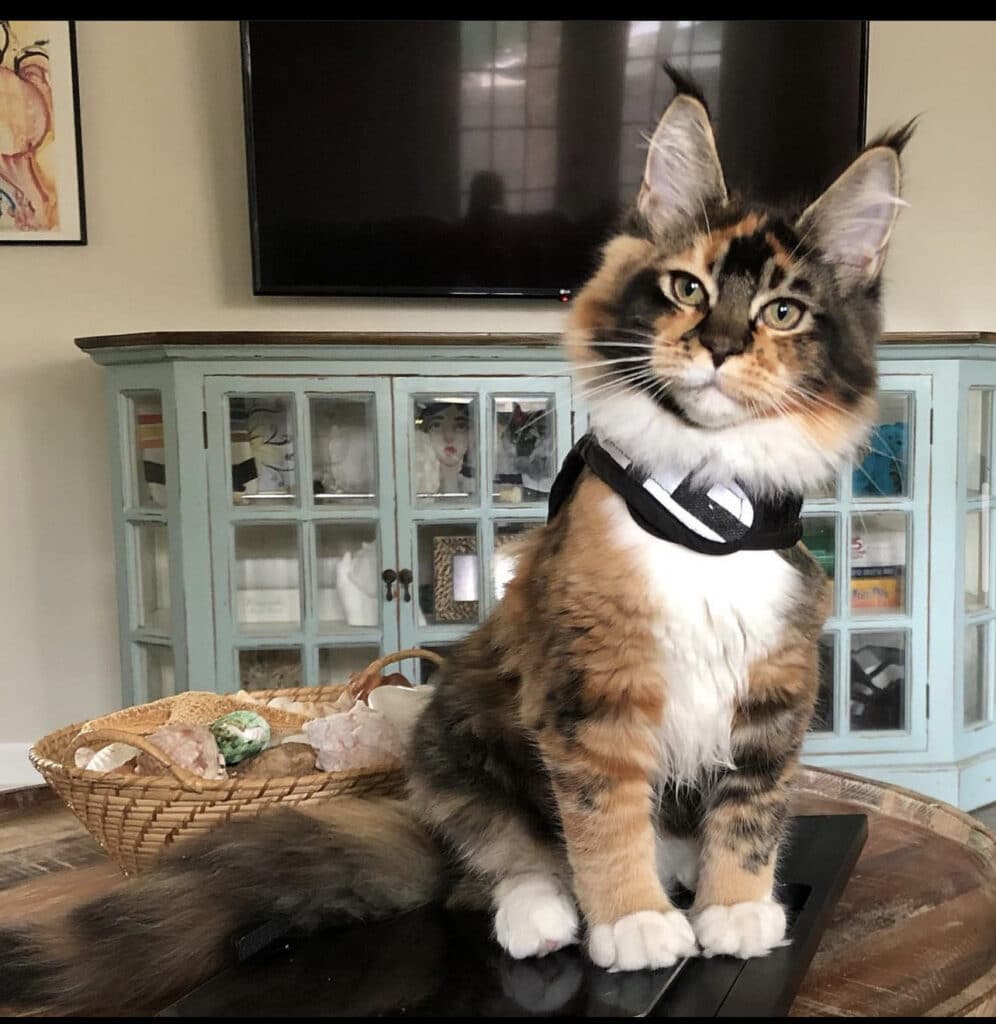
Maine Coons do like being close to their humans. They love sitting on the couch while you watch TV, hanging out in your office while you work, or sleeping at the foot of your bed. They’re physical proximity seekers.
But full-on lap sitting? It depends on the individual cat. Some Maine Coons are total lap cats. They’ll curl up on your lap and purr for hours. Others prefer sitting next to you on the couch or bed. And some are somewhere in between, willing to lap-sit for 10 minutes before wandering off to do their own thing.
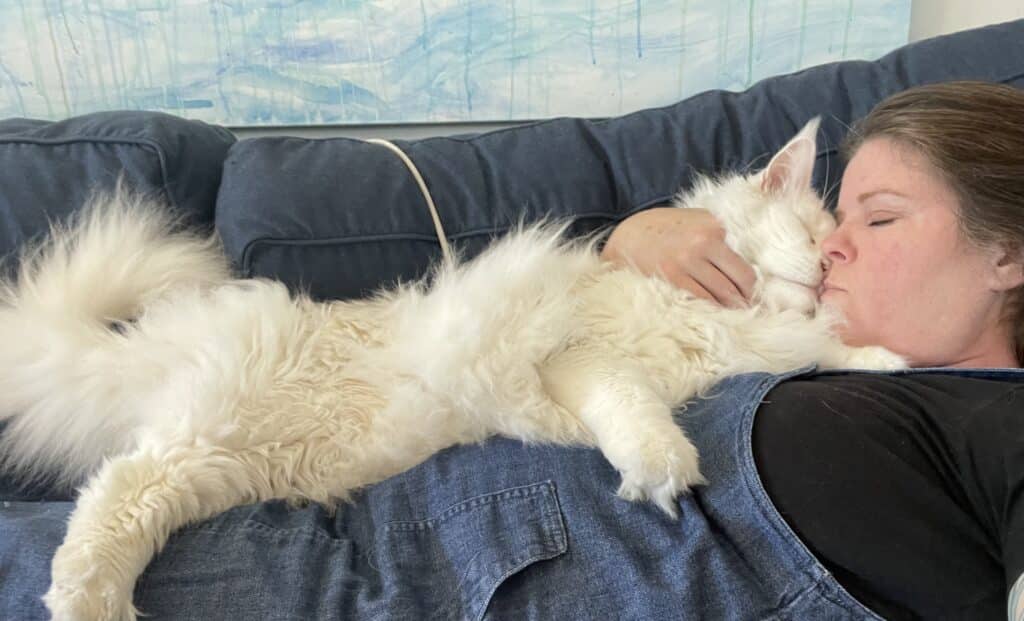
This variation often comes down to maturity. Young Maine Coon kittens are typically more playful and less interested in sitting still. As they mature (around 4-5 years), they tend to mellow out and become more cuddly. Adult Maine Coons are often much more lap-friendly than teenagers.
Maine Coon Love Language
Not every Maine Coon will be a lap cat, but that doesn’t mean they don’t love you! Cats have their own love languages, and once you recognize them, you’ll realize just how affectionate your Maine Coon really is.
Here are some ways Maine Coons show love besides cuddling:
Slow blinks – This is a cat’s way of saying, “I trust you.”
Sleeping near (or on) you – A sign they feel safe and comfortable.
Head bumps – A way of marking you as “theirs.”
Soft chirps, trills, and meows – Their way of communicating affection.
Bringing you gifts (toys, bugs, or even a sock!) – A sign of trust.
Following you around the house – They love your company!
Purring in your presence – A sure sign of happiness.
Showing their tummy – The ultimate sign of trust (but not always an invitation to rub!).
Understanding your cat’s unique way of expressing love makes your bond even stronger.
Are They Good for First-Time Owners?
They’re the right breed for people who want a relationship with their cat, not just a pet that happens to live in the house. Maine Coons are an excellent choice for first-time cat owners because of their:
Gentle, forgiving temperament
Social, people-oriented nature
Trainability and responsiveness
Tolerance with children and other pets
Patient, non-aggressive disposition
Is a Maine Coon Right for You?
If the Maine Coon temperament sounds like your ideal companion, it’s time to explore what it takes to bring one home.
→ Explore Our Buyer’s Guide — Learn about pricing, choosing male vs. female, preparing your home, and more.
→ Browse Available Kittens — See our current available kittens and learn how to reserve yours.
At Sassy Koonz, every kitten we raise is has an emphasis on health and temperament. We believe a well-bred Maine Coon with excellent personality is the perfect addition to your family.
Do Maine Coons like to be held?
As with any cat, this depends on their temperament! Some love to be held, some tolerate being held, and some hate being held.
After working with hundreds of Maine Coons for nearly 10 years, we can summarize this. Most of them want to be around you, no matter where you go. They follow you from room to room and observe your every move. They “hang out” more than they like being picked up and held. Additionally, they all enjoy a good cuddle session on the sofa!
Ready to Learn More About Maine Coons?
Now that you understand Maine Coon temperament, explore other traits that define this remarkable breed:
- Maine Coon Characteristics — Overview of physical traits & breed standard
- Maine Coon Size & Growth — Size chart and growth timeline
- Maine Coon Colors — All 85+ recognized color combinations
- Maine Coon Lifespan — How long Maine Coons live
- Polydactyl Maine Coons — Understanding extra toes
Discover more from Sassy Koonz Maine Coon Cattery
Subscribe to get the latest posts sent to your email.


Love these information and I love MC although never had one. Right now have a kitten probably mixed and I wonder if you can tell me if he has MC gene by looking at his picture?