
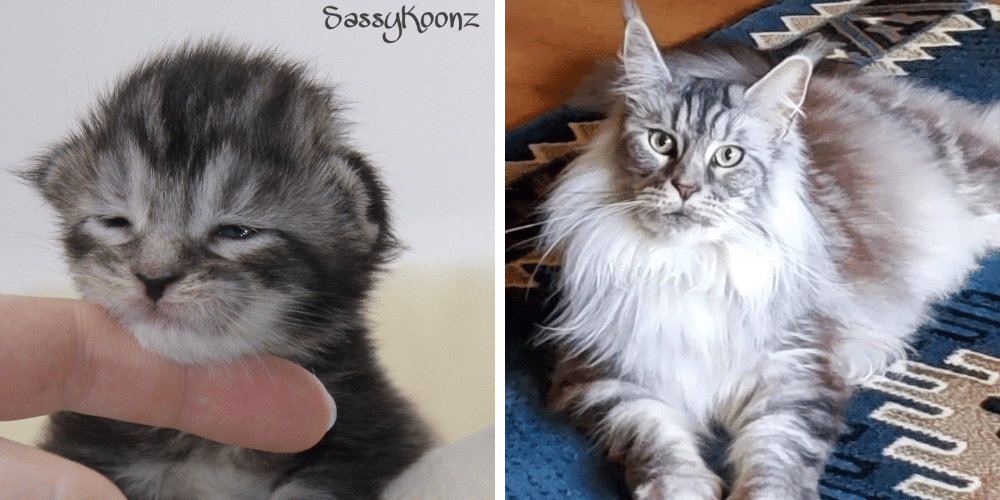
Maine Coons don’t grow like other cats.
Most domestic cats are done growing by their first birthday. A Maine Coon? Still a teenager. These cats take 3 to 5 years to reach full maturity — and the transformation from a tiny, blind newborn into a 20-pound gentle giant is unlike anything you’ll see in other breeds.
I’ve been breeding Maine Coons at Sassy Koonz since 2017. I’ve tracked hundreds of kittens through every growth stage, weighed them daily as newborns, and watched them develop from helpless little potatoes into confident, majestic adults. Everything in this guide comes from that hands-on experience.
Whether you’re on a waitlist, just brought a kitten home, or wondering why your 6-month-old looks like a gangly teenager — find your kitten’s age below and click in.
Every Stage of Maine Coon Development
Click any stage to jump to the full breakdown — weight ranges, milestones, what’s normal, and what to watch for.
Eyes closed, ears folded, completely dependent on mama. These tiny potatoes double their birth weight in the first week alone. Your only job? Don’t panic, and let mama do her thing.
Eyes are open, ears standing up like little bear cubs, and those first wobbly steps are equal parts adorable and hilarious. Baby teeth are coming in and the litter box makes its debut.
Mama’s cutting them off. They’re eating real food, wrestling siblings like tiny MMA fighters, and their personalities are on full display. First vet visit happens this stage too.
This is when you fall in love with photos of your future kitten. Fluffy, bright-eyed, full of personality. Vaccinations starting. And no — a reputable breeder is NOT sending them home yet.
Full house freedom, making friends with the big cats, developing their own routines. Reservations open at week 10, and by week 12 they’re ready for their forever homes.
Your kitten is home. First major growth spurt is underway — legs lengthening, paws comically oversized, soft mane forming. The first week is all about settling in.
Boys are pulling ahead in size. Chests widening, coordination improving, and they’re jumping on things you didn’t think they could reach. Teething in full swing — expect nibbling.
Your Maine Coon looks like a gangly teenager and eats like one too. Already as long as most adult cats but way leaner. The “looks too skinny” phase is totally normal.
They look like an adult. They are NOT an adult. About 80% of final weight, still a kitten mentally. The “teenage independence” phase is real. It passes.
The long game. Still adding muscle, broadening through the chest, growing that magnificent winter coat. Some cats keep developing right up until age 5. The number on the scale matters less than the trend and body condition.
Maine Coon Kitten Weight by Week
Maine Coon kittens grow fast in the first weeks — then slow into a long, steady build toward full maturity. Here’s what to expect on the scale:
| Age | Male Weight | Female Weight | Key Milestone |
|---|---|---|---|
| Birth | 90–170g | 90–150g | Eyes and ears sealed |
| 1 Week | ~200–260g | ~180–240g | Should gain 10–15g/day |
| 2 Weeks | ~300–400g | ~280–370g | Eyes beginning to open |
| 3–4 Weeks | 450–800g | 420–750g | First steps, baby teeth in |
| 5–7 Weeks | 0.7–1.1 kg (1.5–2.5 lbs) | 0.65–1 kg | Weaning, first vaccines |
| 8 Weeks | 2–3.5 lbs | 1.5–3 lbs | Full personality emerging |
| 9–12 Weeks | 2.5–5 lbs | 2–4 lbs | Go-home age |
| 3 Months | 3–5 lbs | 2.5–4 lbs | First major growth spurt |
| 4 Months | 4.5–7 lbs | 3.5–5.5 lbs | Gender difference visible |
| 6 Months | 7–12 lbs | 5–8 lbs | Lanky teenager phase |
| 1 Year | 13–18 lbs | 8–12 lbs | ~80% of adult weight |
| Full Grown (2–5 yrs) | 18–25 lbs | 10–15 lbs | Full maturity |
Maine Coon Kitten Development Milestones Chart
A quick-reference summary of every key milestone from birth through 12 weeks:
| Week | Key Milestones |
|---|---|
| Newborn | Eyes and ears sealed · Fully dependent on mama · Gaining 10–15g/day |
| Week 1 | Starting to scoot · Umbilical cord falls off · Mama does everything |
| Week 2 | Eyes begin opening (days 8–10) · Ear canals opening · Getting mobile |
| Weeks 3–4 | Walking (wobbly) · Baby teeth in · Litter box introduction · Play-fighting begins |
| Weeks 5–6 | Weaning starts · Eating solid food · Litter box mastered · Hopping everywhere |
| Week 7 | First vaccinations · Critical socialization window · Full weaning from mama |
| Week 8 | Nursery graduation · Meeting adult cats · Non-stop energy · NOT go-home age yet |
| Week 9 | Full house freedom · Individual personalities emerging · Socializing with adult cats |
| Week 10 | Face structure taking shape · Muzzle, ears, bone structure visible · Reservations open |
| Week 11 | Confident and bold · Testing boundaries with adult cats · Independent explorer |
| Week 12 | Vaccinated · Microchipped · Bubble bath & nail trim · Ready for forever home ❤️ |
Newborn Maine Coon Kittens: Birth to 2 Weeks
Maine Coon kittens are born with their eyes sealed shut and their ears folded flat. They can’t see, can’t hear, and can’t regulate their own body temperature. They’re completely dependent on mama for warmth, food, and bathroom help.
Sound fragile? They are. But they’re also growing at a shocking pace. A healthy kitten should gain 10–15 grams per day in the first two weeks. If you’re weighing daily (and you should be), you’ll literally watch the scale creep up every morning.
Having brand new kittens in the house feels a lot like bringing home a human baby — especially if it’s been a while since you’ve been around one. They seem so fragile and delicate. Almost breakable. For the first couple of days, I leave mama alone to rest and bond with her babies. She hardly leaves the kitten box, barely eats, and is completely consumed with her new role. You can see it in her body language, her purrs, the way she tucks them in close. Instinct takes over and it’s fascinating to watch.
By day three, mama’s appetite roars back. She scarfs her food and races back to her babies. That’s when I start handling the kittens for a few minutes at a time — tiny head rubs, quick photos, always keeping them close to mama so she can see I’m not taking them anywhere. She’ll chirp at me the whole time. It’s her way of saying, “I’m watching you, but I trust you.”
By the end of week one, the kittens have already gained about 4 ounces each. You can see them getting physically stronger every day — the way they scoot around, how they hold their little heads up. Mama is doing all the real work at this point. My job is weighing them daily, checking on everyone 15–20 times a day, and staying out of the way.
Then around day 8, the magic happens — one of the babies has a tiny little peephole into the world. By the next day, the other one’s eyes are cracking open too. It takes about two days for them to open all the way, but once they do, these kittens come to life. Their vision won’t be clear until around 10–12 weeks, but when you walk into the room and they look up at you for the first time? There’s nothing like it.
What’s happening during this stage:
- Eyes start opening around days 7–10 — it takes a couple of days for them to open fully. Vision is blurry until about 10–12 weeks.
- Ears are flat against the head — ear canals open gradually during week 2.
- Umbilical cord falls off around days 5–7.
- Mama handles everything — nursing, stimulating them to go to the bathroom, keeping them warm. Your job is to weigh daily and not interfere unless something’s wrong.
The biggest red flag at this stage is a kitten that isn’t gaining weight or is losing weight for more than one day. That’s when you step in with supplemental feeding.

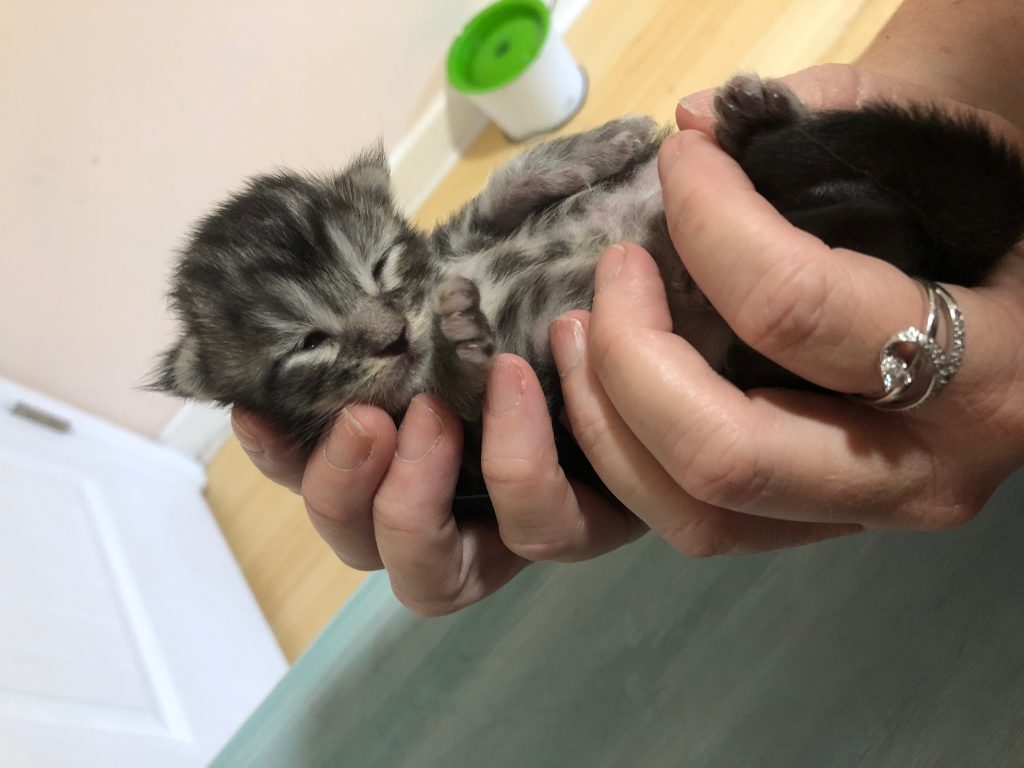
Along with the eyes opening, they start getting mobile in week two. They’re not walking — more like scooting. Super wobbly, super shaky, but determined. It’s amazing that something that’s only been in the world for 10 days can get up and start moving with purpose. Rapid development is definitely happening in kitten world.
Here’s a video of little Clare taking some of her first steps:
As for mama — Ursula spent nearly the entire first week in the birthing box with her babies. By week two, she’s a different cat. Well rested, appetite is ferocious, and she’s already got her figure back. She’s settling into the rhythm of motherhood now — taking advantage of the quiet time when the babies are sleeping, but the second one of them makes a peep, she’s right back in that box. She’s such a good mom.
When the kittens aren’t scooting around, they’re snuggled up together to stay warm, taking lots of naps. No surprise there.
3–4 Week Old Maine Coon Kittens: Eyes Open, First Steps
The third week of life brings a whole new level of awareness. The Maine Coon babies are on their feet and getting traction now — much less wobbly than before. Still not steady, but way more mobile and determined to get somewhere.
Their appearance is really starting to take shape. Little heads are rounding out, fur is getting shaggy and soft, and the personality differences between littermates are obvious. You can already tell which one is the adventurer and which one hangs back.
When Do Maine Coon Kittens Start Walking?
Maine Coon kittens take their first wobbly steps during weeks 3–4 — though “walking” is generous at first. It’s more like a determined, shaky scoot. By the end of week 3 they can get around their playpen with real purpose. By weeks 4–5 they’re running, jumping, and play-fighting with littermates. Maine Coons develop slightly more slowly than other breeds, so don’t be alarmed if your kitten seems a few days behind standard timelines — it’s completely normal for this breed.
This is also when they graduate from the kitten box to a bigger playpen. More space to venture out, take some longer strides, and start figuring out how to be a real kitten. They’ll stay in the playpen until they can escape on their own — which usually takes a couple of weeks. Then they get the run of the nursery.
Every day is a new experience at this stage. I’m in the nursery constantly, and these kittens seem to change by the hour. One minute their ears are a little floppy. Next time I check, they’re standing straight up. It happens that fast.

Baby teeth start coming in around week 3–4 — and once they have teeth, things change fast. I start feeding mama in the playpen with her babies so they can watch and learn. Wet food in the morning, dry kibble the rest of the day (the special tiny kibbles made for kittens, so when they’re ready to eat on their own, the transition is easy). At this point, they’ve shown absolutely zero interest in any food other than their mommy.
One of my favorite moments happened during week four. I had the babies out of the playpen and was lying on the floor with them. There was a water bowl nearby and one of the kittens walked right up to it, stuck her whole head in, got water up her nose, snorted — and then realized she loved it. Ursula immediately ran over and showed her kittens the proper way to drink. Then she sat close by while they lapped up their first water like little pros. I caught some of it on video:
Key milestones at 3–4 weeks:
- Standing and walking (wobbly but determined)
- First play-fighting with littermates — tiny MMA matches begin
- Litter box introduction — a low-sided box with non-clumping litter. Mama shows them the ropes.
- Personality differences emerge — you can already tell the bold ones from the cautious ones.
- Baby teeth come in — and the nibbling begins
- First exposure to water — with mama’s supervision, of course
Now that they have some stability, they’re starting to play with toys. I add a few small things to their playpen — balls, a weeble wobble — and they go nuts. The goofy newborn look is fading, and they’re growing into beautiful little kittens.
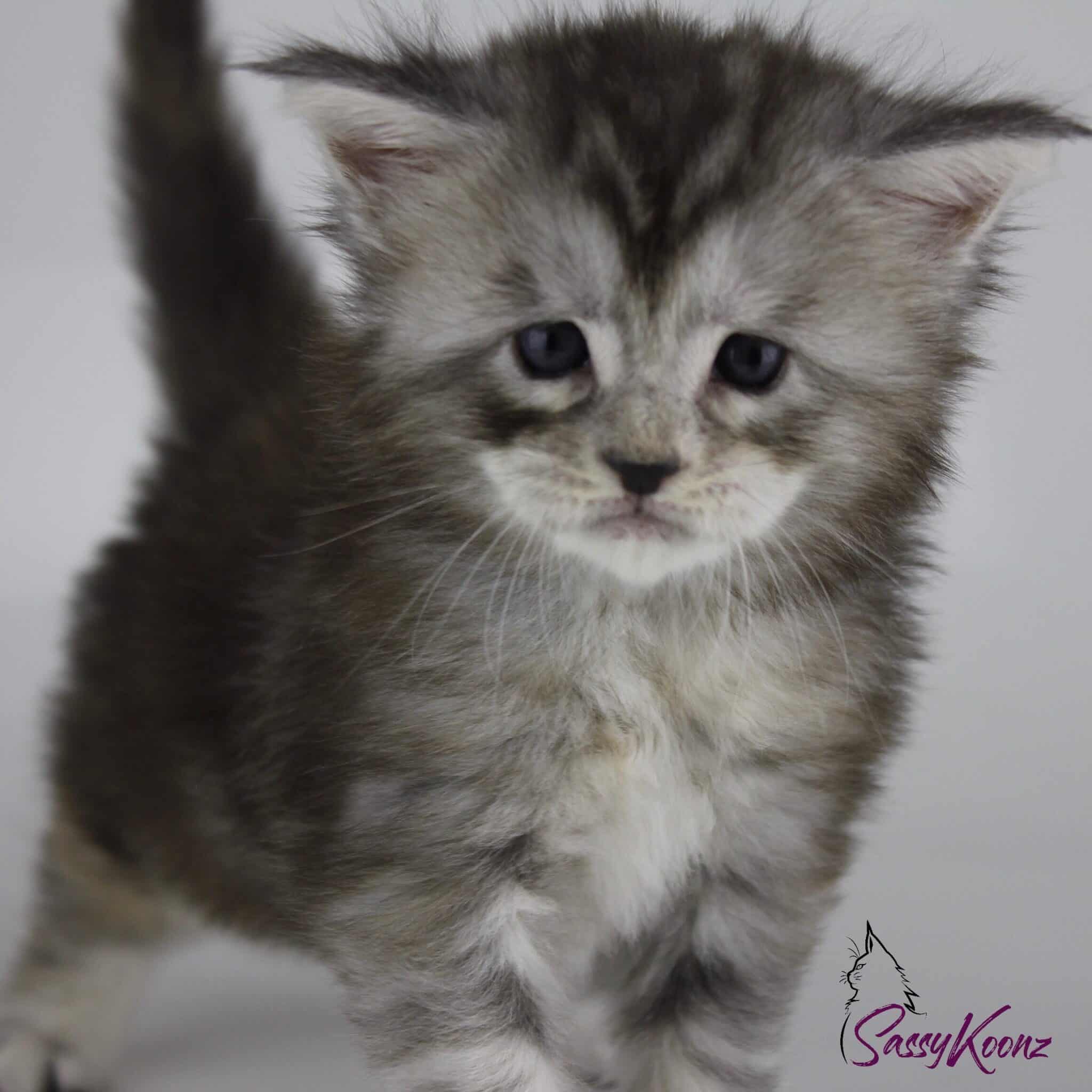

Breeders always say that raising Maine Coon kittens is rewarding. After watching them go from blind, helpless newborns to pouncing little furballs in just four weeks — I completely understand why.
It’s hard to pick out what these babies do that’s the cutest, but when they play-fight each other it’s too much. For such tiny little creatures, they act all grown up — wrestling, kicking each other with their back legs, the whole nine yards. Here’s a little glimpse of what it looks like when tiny Maine Coon kittens duke it out:
5–7 Week Old Maine Coon Kittens: Weaning, Socialization, and First Vaccinations
When Do Maine Coon Kittens Start Eating Solid Food?
Maine Coon kittens begin transitioning to solid food between 4 and 5 weeks of age. The process is gradual — I start by offering wet food mixed with a little kitten milk replacer to create a soupy consistency they can lap up alongside nursing. By weeks 6–7 most kittens are eating both wet and dry kitten food independently. Full weaning from mama is usually complete by 8 weeks, though continued nursing alongside solid food provides important immune support right up until then. At Sassy Koonz, kittens are started on Purina One Healthy Kitten kibble and Evangers Limited Ingredient canned food, with a rotation of several premium brands so they’re well-adjusted before going home.
Week 5: The Week They Become Real Kittens
This week was remarkable to watch. They’ve suddenly become little pouncing furballs of happiness. It’s complete madness in the kitten nursery unless they’re sleeping — and when it’s nap time, they literally just stop what they’re doing and close their eyes. Lights out.
The kittens are pouncing around, hopping everywhere, playing with toys, chasing strings. Ursula has moved up to her cat tree basket now, sitting high and watching over them like a queen on her throne. If they make any weird noises, she dives down to investigate.
They love to pick on their mama. It’s joyous to watch Ursula lying around with her daughters while they chew on her ears and chase her tail. She just acts like she’s in heaven the whole time, never flinching a muscle while they nibble with their tiny teeth.
The kittens are still nursing from mom, but they now have canned food and dry kitten kibble available in their playpen. They’re learning from mama how to eat real food. And the litter box? It took a couple of days after I put a low-sided one in there with non-clumping litter, but then I walked in and found that someone peed in it. Now it’s a regular thing. I’m assuming Ursula showed them how to get it done — because they’re getting it done.
Week 6: Kitten Romper Room
Walking into the nursery at this stage is like walking into Romper Room. They don’t just walk around anymore — they HOP around like little kangaroos. They’re awake a lot more now, and you can hear their little paws pitter-pattering all over the floor anytime they’re up. Every waking moment is dedicated to playing.
I had them in a small area with a baby gate, but they started climbing. So the gate came down and now Ursula and the kittens have the whole room to themselves. Getting the room ready is like preparing for a crawling baby — anything at their level needs to be kitten-proof, and they need a lot of toys.
Before I took the gate down, I was sitting in the pen with them, videoing, hoping to catch a cute moment. I moved my foot and scared the poop out of Clare:
The kittens are fully eating on their own now — both canned food and dry kibble. Ursula still lets them nurse sometimes, but it’s short-lived. If they catch her lying down she’ll tolerate it for about 30 seconds, then gets up and runs away. She’s teaching them to be independent. And I’m sure those little teeth hurt if they bite the wrong spot.
One of my favorite things about this stage: the babies know the sound of the door. No matter what they’re doing — even dead asleep — they jump up and run to greet you the second you walk in. Then they start climbing up your legs. My legs were scratched up for weeks from them climbing all over me, but it’s ok. They heal. My husband kept asking, “What happened to your leg?” Now he knows — I’ve been sitting on the floor with the kittens.
Week 7: First Vaccinations
This week the kittens got loaded up in the cat stroller and walked to the vet — we live just a couple of blocks away, so it was a fun little trip. They got to see outside for the first time.
The vet loved them. Pink was totally fine with her exam and shots, but Clare was a sassy little thing and put up a fight. They’ll go back in 3 weeks for booster shots, and then the new Guardians take them in for the final booster and rabies vaccine.

This is THE critical socialization window. How a kitten is handled between weeks 4–8 shapes their temperament for life. At Sassy Koonz, that means:
- Multiple daily handling sessions with different people
- Gentle exposure to household sounds (vacuum, TV, music)
- Introduction to nail clipping and light brushing
- Interactive play with a variety of toys
- First vet visit and vaccinations
- Full weaning from mama
8 Week Old Maine Coon Kitten (2 Months)
Since the babies got their first set of vaccinations last week, they’re finally able to come out of the nursery where they’ve been living since birth. At first I put up a baby gate at the nursery door, but that didn’t last long.
What a big new world for them. They’ve gotten to meet the big boy cats, a dog, and run around the living room like absolute maniacs. I let them out any time I’m home so I can monitor, and they spend the time socializing with the other animals and getting used to a larger living space.

They are NON-STOP. This might be the most fun week of watching them so far. Full of energy, high leaps, and personality. If they’re awake, they aren’t lounging — they’re high-tailing it through the house, wrestling each other, jumping and climbing on everything. The big cats just sit around and watch the babies like it’s their own personal entertainment.
This is usually when future families first see photos of their kitten and fall completely in love. They’re fluffy, bright-eyed, ears standing tall with soft tufts forming, and their tails are already impressively long for their body.
Breeder’s note: A reputable breeder is not sending a kitten home at 8 weeks. A Maine Coon’s immune system is not fully developed at this age, and they still have critical learning to do with mama and siblings. At Sassy Koonz, kittens go home no earlier than 10–12 weeks. Non-negotiable.
There’s not much time left for the babies at Sassy Koonz. In just a few more weeks, they’ll begin their new lives with their forever Guardians. It’s bittersweet. Until then, I’ll be lapping up every bit of playtime and snuggles with these kittens before they start their next journey.


9–12 Week Old Maine Coon Kittens: Becoming Real Cats
Week 9: Personalities Start to Shine
The kittens have the run of the house now — except at night when I’m asleep. I’ve monitored them enough at this point to feel comfortable letting them explore freely and just be kittens. They’re learning to live in a household with normal everyday sounds: vacuum cleaners, people talking, TVs, doors opening and closing, and a little Pink Floyd playing in the background.
Something really interesting happens around week 9 that I always look forward to: their personalities start to individualize. Up until now, they basically all act the same. I genuinely can’t see a true difference in genders, interactions with humans, or quirky behaviors before this point. But once they start to come into their own, I can pick out which kitten is the talkative one, which one is the goofball, which one is the wallflower, and which one is the little menace who’s always causing trouble. It’s one of my favorite things about this stage — watching them become themselves.
They definitely enjoy hanging out with the big cats. In fact, Pink and Omega became total besties — those two are always together.


Week 10: A Face You Can Finally See
Maine Coons are slow to mature — I mention that several times throughout this guide, and it’s worth repeating here. But at 10 weeks old, you can see a noticeable maturity in their face that wasn’t there even a week ago. It’s certainly not their final look, but the development of the muzzle, ears, and bone structure really starts to come together and take shape. The baby roundness gives way to something that hints at the adult cat they’re becoming.
It’s always amazing to me to compare a kitten’s 10-week photo to their adult photos a few years later. The changes are fascinating. That little face with the oversized eyes and wobbly ears eventually becomes a broad muzzle, high cheekbones, and those magnificent lynx-tipped ears. The transformation doesn’t happen overnight — but week 10 is often the first time you can start to see where it’s headed.
This is also when reservations typically open at Sassy Koonz. Future Guardians start seeing real photos of their kitten for the first time, and it’s impossible not to fall completely in love.
Week 11: Testing Every Boundary
The babies have really matured. They’re independent now — they have their own favorite places to sleep and hide, and they know the sound of the treat tower being loaded up and come running for it. The difference in their behavior from the first time I let them out of the nursery until now is remarkable.
With one more week before they go home, the kittens are building more confidence every single day. They’re exploring new places they’ve never dared to go before, and they’re getting a little testy with the adult cats. You might see a kitten smack one of the big cats right on the head and then take off running. We’ll call it testing the waters. The adult cats take it surprisingly well — mostly because they know the kittens are leaving soon. At least that’s my theory.
This is exactly why keeping kittens for 12 weeks — fully socialized with humans, pets, sounds, and the rhythms of daily life — is so critical. By week 11 they’re cool, confident little kittens ready to take on the world.

Week 12: Go-Home Day
The day before they leave, I give every kitten a bubble bath. I like for them to smell like a baby — and they do. They come out soft, silky, and incredibly fluffy. They also get a fresh nail trim. It’s my way of sending them off at their absolute best — clean, polished, and smelling amazing for the families who have been waiting weeks to meet them.
The Maine Coon kittens are ready to go to their new homes. It’s bittersweet. My job is done. I’ve loved these babies for the past 12 weeks, nurtured them from day one, and watched them grow from helpless newborns into confident, socialized, beautiful kittens.
I always wonder what the kittens are thinking when I tell them they’re about to meet their new families. They seem like they’re on their absolute best behavior that last day — calm, sweet, unusually cooperative. Maybe it’s just my imagination. But I like to think they somehow know something special is happening. 😄
Now it’s time for them to start the next chapter with their forever Guardians.


3 Month Old Maine Coon: What to Expect When They Come Home
Your kitten is vaccinated, socialized, vet-checked, and ready to start life with you.
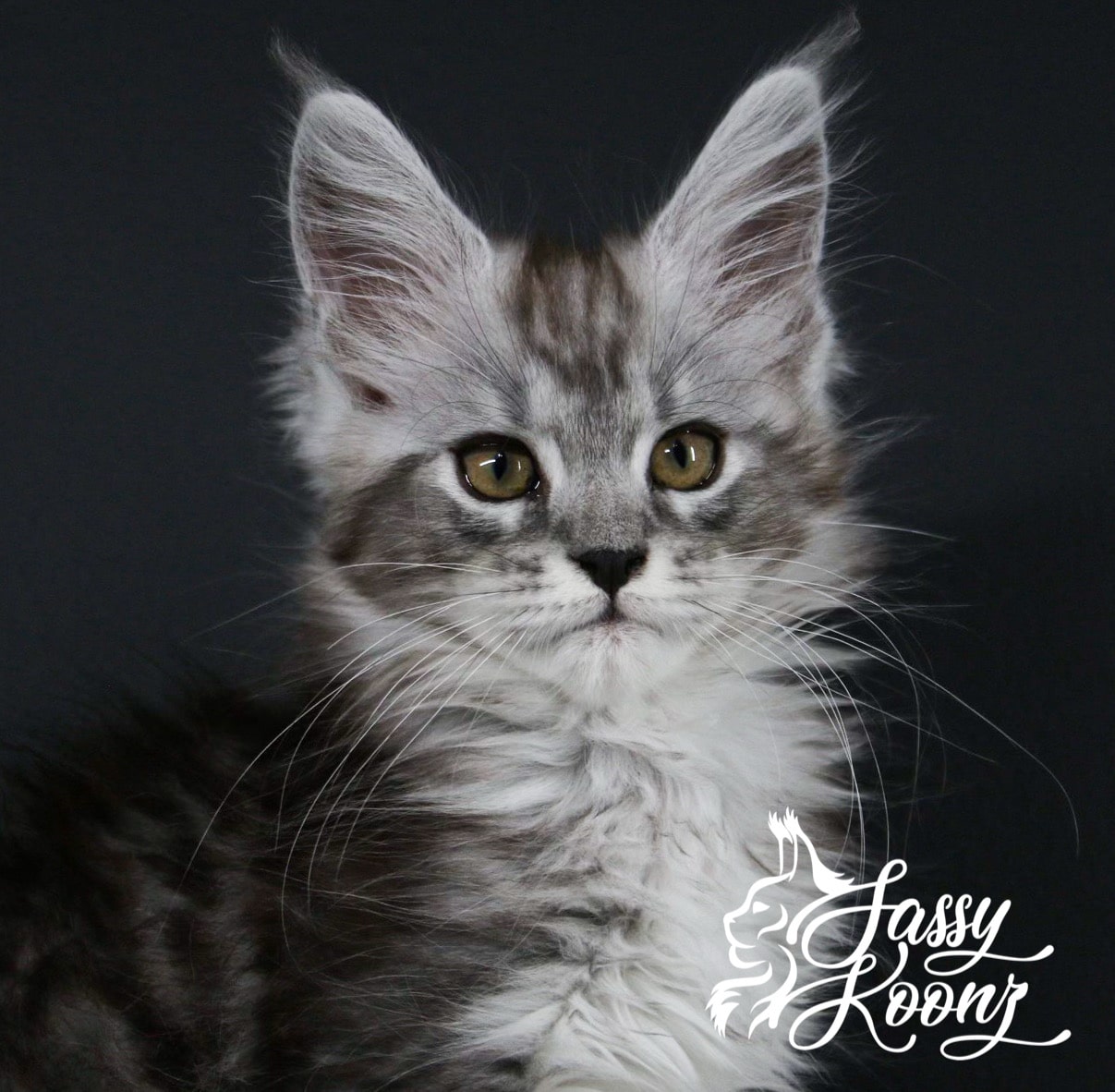
They’re in the middle of their first major growth spurt. Legs are lengthening, paws look comically oversized, and a soft mane is forming around the neck. They’re eating like little machines.
The first week in a new home is all about settling in. Don’t be surprised if they’re shy at first — everything is new. Keep them in one room, let them explore at their own pace, and resist the urge to overwhelm them with visitors.
Within a few days, most Maine Coon kittens are ruling the house like they’ve lived there forever.
 How to Help Your Maine Coon Adjust to Its New Home →
4 Month Old Maine Coon Kitten
Gender differences are obvious now. Boys are pulling ahead, their chests are starting to widen, and they’re jumping on things you didn’t think they could reach.
Teething is in full swing. If your kitten is nibbling on everything in sight, that’s why. Provide chew toys and redirect. This phase passes.
Great time to lock in a grooming routine. Light brushing 2–3 times a week gets them used to it before the adult coat comes in and matting becomes a real issue.
Many Maine Coons at this age start following you room to room, chirping for attention, and getting into absolutely everything.
 Start Grooming Your Maine Coon →
6 Month Old Maine Coon: The “All Legs” Phase
If your Maine Coon looks like a gangly teenager right now, congratulations — they’re right on schedule.
At 6 months, they’re in the lankiest, most awkward phase of their life. Already as long as most adult regular cats, but lean and leggy with none of the bulk they’ll eventually develop. New owners sometimes worry their kitten is “too skinny” — this is completely normal.
What’s happening at 6 months:
- Appetite is at an all-time high. Feed them. They’re burning through calories like crazy.
- Energy is through the roof. Cat trees, wand toys, and things to climb are essential right now.
- The mane is starting to fill in around the neck and chest. Won’t reach full glory for another year or more.
- Spay/neuter timing comes up. For Maine Coons, many breeders recommend 6–9 months to allow skeletal maturity.
This is when owners ask me, “Is my Maine Coon going to be big?” Honestly? Too early to know for sure. They have years of filling out ahead. Track the trend — if they’re gaining steadily and the vet is happy, you’re good.
1 Year Old Maine Coon: Big Kitten Energy
Happy birthday to your Maine Coon! They look like an adult. They are not an adult.
At 1 year, they’ve hit about 80% of adult weight. Significant muscle development, chest broadening, and filling out still to come over the next 2–4 years. Mentally? Still a kitten in a big cat’s body.
You might notice a behavioral shift. The kitten who wanted to be held 24/7 may start acting more independent — hopping down sooner, sitting near you instead of on you, asserting their own schedule. This is the “teenage phase.” It’s normal and it passes.
By 2–3 years, most Maine Coons settle back into being the affectionate, dog-like companions the breed is known for.
Nutrition note: transition from kitten food to high-quality adult food around this time. Your vet can help you find the right one.
Maine Coon Diet and Nutrition Guide →When Do Maine Coons Stop Growing? The 2–5 Year Journey
The long, slow build to full maturity. Height and length growth is mostly done, but your Maine Coon is still:
- Adding muscle mass across the chest, shoulders, and hindquarters
- Developing their full adult coat — the lion mane, luxurious tail, and thick winter ruff arrive around age 2
- Broadening through the chest — males especially continue widening well into year 3
The #1 question I get: “Is my Maine Coon too heavy?” The answer isn’t about the scale. It’s about body condition.
Quick body condition check: Run your hands along their sides — you should feel ribs without pressing hard. Look from above — you should see a waist. Look from the side — belly should tuck up slightly, not hang round. Ribs hard to feel, no waist, round belly? That’s excess weight. But if your Maine Coon is 22 pounds with a broad chest, a visible waist, and you can feel their ribs? That’s a healthy big cat. Don’t let anyone tell you they need to lose weight just because the number sounds high.
Maine Coon Development FAQ
When do Maine Coon kittens open their eyes?
Maine Coon kittens begin opening their eyes between days 8 and 10 after birth. The process takes about 2 days to complete — usually one eye opens slightly before the other. Vision remains blurry until around 10–12 weeks of age, when full visual clarity develops.
When do Maine Coon kittens start walking?
Maine Coon kittens take their first wobbly steps during weeks 3–4. By week 3 most can get around their playpen with real purpose. By weeks 4–5 they’re running, jumping, and play-fighting. Maine Coons develop slightly more slowly than other breeds, so don’t be alarmed if your kitten seems a few days behind typical timelines — it’s completely normal for this breed.
When do Maine Coon kittens start eating solid food?
Maine Coon kittens begin transitioning to solid food between 4 and 5 weeks of age. By weeks 6–7 most kittens are eating independently. Full weaning from mama is usually complete by 8 weeks. At Sassy Koonz, kittens go home already accustomed to both wet and dry food to make the transition to their new home easier.
How much do Maine Coon kittens weigh at birth?
Maine Coon kittens typically weigh between 90 and 170 grams (about 3.5–6 oz) at birth. Healthy kittens should gain approximately 10–15 grams per day in the first two weeks. Any kitten not gaining weight consistently should be evaluated right away.
How long does it take for a Maine Coon kitten to be ready to go home?
Maine Coon kittens are ready for their new homes at 11–12 weeks. At Sassy Koonz, kittens go home after their first vaccinations, a health certificate from a licensed Florida veterinarian, and microchipping. Kittens placed before 10 weeks miss key developmental windows that affect lifelong behavior and health.
How do I socialize a Maine Coon kitten?
Socialization begins from birth. Responsible breeders handle kittens gently every day from week one. The window from 4–12 weeks is critical — kittens that receive consistent positive human interaction during this period develop into confident, affectionate adults.
Do male Maine Coons grow bigger than females?
Almost always. Males are typically 3–8 pounds heavier and several inches longer at full maturity. The size difference usually becomes visible around 4 months. At full maturity, males average 18–25 lbs while females typically reach 10–15 lbs.
When do Maine Coons get their mane?
Starts as soft neck fluff around 4–6 months. The full lion ruff doesn’t come in until the adult coat develops around age 2. Cold-weather months make it look even more impressive.
Why does my Maine Coon look skinny?
If they’re 4–12 months old, they’re in the “lanky phase.” Maine Coons grow in length and height before filling out with muscle. As long as they’re eating well and gaining steadily, a lean look is completely normal.
Are Maine Coons fully grown at 1 year?
No. About 80% of adult weight at 1 year. Most continue developing muscle, chest width, and coat density until 3–5 years old.
How often should I weigh my Maine Coon?
Daily for the first 2 weeks of life (kitchen scale). Weekly from 2 weeks to 6 months. Monthly after that. Always weigh at the same time of day for consistency. Track the trend over time — individual readings matter less than the direction they’re moving.
Looking for a Maine Coon from Health-Tested, Pedigreed Lines?
Every Sassy Koonz kitten comes from parents screened for HCM, hip dysplasia, and genetic conditions. Raised in-home with daily handling from birth.
View Our Available Kittens →Discover more from Sassy Koonz Maine Coon Cattery
Subscribe to get the latest posts sent to your email.


Thank you for the updates makes me miss my Harley
Ohhh, sooo beautiful ?
I’m loving this journey with you!! Reading every week is like reliving our time with our first kitten litters!
So amazing…so moving…so emotional in a good meaning…so much love!!
I love that you’re being able to experience this and share these precious moments <3 I think it is also wonderful for the families who adopt your kittens to be able to "be there" as well.
Keep doing what you're doing and love every second of it!!
Enjoy watching the two of them grow. So beautiful!!
Thank you for the wonderful videos. I’m anxiously waiting to take home my two baby cooners. They’re only 4 weeks old. Nice to see how they grow and change so quickly.
Do you have 2 female Maine Coon kittens?
Do you have or will you have any kittens in the next two months?
Yes