

One of my favorite ways to live is knowing that time is my most valuable asset. It’s yours, too. Before you know it, another year has come and gone. Don’t let the years get away from you without taking your Maine Coon cat in for an annual health exam.
Just like any big commitment in life, our cats need proper care to stay healthy and happy. That starts with knowing what annual vet exams should look like at every stage of your Maine Coon’s life.
I’ll guide you through what a good exam covers for kittens, adults, and seniors. I’ll also explain the specific health conditions Maine Coons are known for and when you should be checking for them. The more you know before going to your appointment, the better advocate you can be for your cat.
The Yearly Foundation Health Exam Checklist
Regardless of your Maine Coon’s age, there’s a standard checklist of things that your vet should check every year.
- Full nose-to-tail physical exam
- Check for heart murmurs
- Weight and body condition assessment
- Dental exam
- Parasite prevention
- Vaccine updates as needed
As a breeder, I send every Sassy Koonz kitten home with their health records and vaccination history already started.
What We Start Adding As They Grow
This is where it gets more specific. As your Maine Coon moves through life stages, you start adding in additional screenings on top of that yearly foundation.
Age 2 — First Cardiac Echocardiogram This is when we get serious about heart health. A stethoscope can detect a heart murmur. However, an echocardiogram provides the full picture of how the heart is actually functioning. Age 2 is when we establish that baseline, then we’ll do another at age 4.
Age 3 — Blood work Begins At 3 years old, we start annual blood work. This includes a full CBC and chemistry panel. This tells us how the kidneys, liver, thyroid, and blood sugar are doing. You want this baseline locked in while your cat is young and healthy.
Age 5+ — Cardiac Echos Get More Frequent We move from every two years to annual echos. HCM risk increases with age, so we start watching more closely.
Senior Maine Coon Cat Health
Age 7 — Everything Doubles :Welcome to senior life. Vet visits go from once to twice a year. Blood work goes twice yearly. We add blood pressure checks, kidney-specific testing, and thyroid panels to every visit. Arthritis and hip dysplasia assessment becomes part of the conversation, too.
Age 10+ — Fine-Tuning the Senior Routine By this point you and your vet are a well-oiled team. The focus shifts to managing what’s already there. This involves keeping any conditions stable. It also requires adjusting medications if needed. The ultimate goal is making sure quality of life stays high. Muscle mass monitoring becomes important here because senior cats can lose muscle even when their weight looks normal.
Sassy Koonz Maine Coons
Maine Coon Health Exam
Quick Reference Guide
A simple breakdown of what to check — and when — at every stage of your Maine Coon’s life.
- Vet visits every 3–4 weeks until 16 weeks
- Listen for heart murmurs at every single visit
- Ask breeder for parent HCM & SMA genetic test results
- Fecal & parasite checks
- Begin dental hygiene routine early
- Annual wellness exam
- First cardiac echo at age 2 — establish your baseline
- Start bloodwork baseline at age 3
- Weight & body condition monitoring
- Annual wellness exam
- Annual bloodwork & urinalysis
- Cardiac echo every 2 years (annually if risk factors present)
- Annual dental exam; professional cleaning as needed
- Watch for signs of hip dysplasia
- Twice-yearly wellness exams
- Bloodwork & urinalysis twice yearly
- Annual or biannual cardiac echo
- Blood pressure check at every visit
- Thyroid & kidney monitoring
- Arthritis assessment & management
- Dental care & weight/muscle condition monitoring
Choosing a Vet for Your Maine Coon
Choosing a good vet for your Maine Coon is the first step to ensuring a healthy life for your cat. Cats can fall ill. It’s essential to have a veterinary clinic nearby for immediate help.
Treat the process exactly like finding a doctor for your baby. A good idea is to take recommendations from friends and family who already have pets, specifically cats.
Not every vet is going to be familiar with Maine Coon-specific health concerns. Most general practice vets see a huge variety of cats and dogs. However, Maine Coon genetics and breed tendencies are a specialty area. We feel it’s important that your vet has a healthy practice and support for Maine Coon Breeders. Being knowledgeable about the most common health issues in Maine Coons is important.
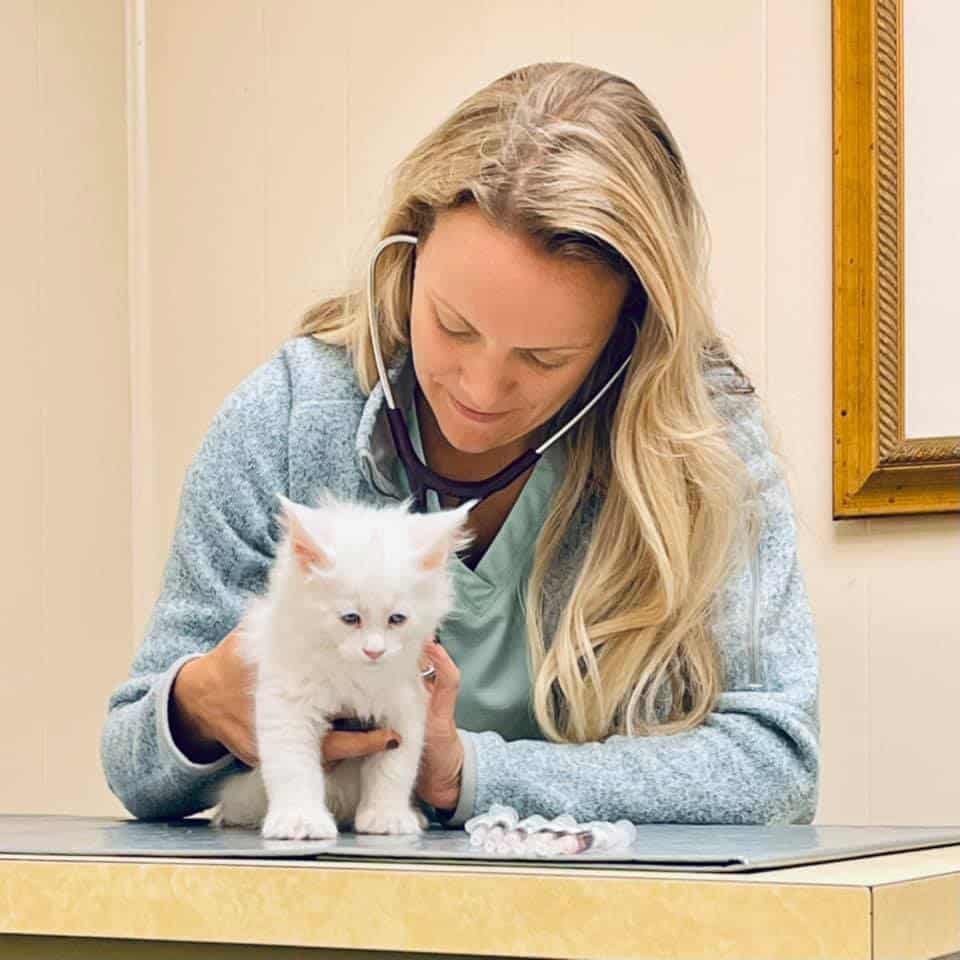
Vet clinics that have an emergency care unit are highly beneficial as they provide a 24-hour service. Not all of them have 24-hour care, however. In that case, keep a nearby emergency care unit in mind to help your cat in emergencies.
The Bottom Line
Maine Coons are incredible cats. They’re loyal, loving, playful, and full of personality. They deserve the best care you can give them. It’s important to know what to watch for and stay on top of their vet care.
Build a relationship with a vet you trust. Keep up with those annual health exams. Just put it in your calendar right now and set a reminder for every year. Most of my cats have their health exam on or around their birthday. Invest in cardiac screening. Don’t skip blood work just because your cat seems fine.
Because your Maine Coon is counting on you to be their advocate. And honestly? They’re worth every bit of it.
Have questions about your Sassy Koonz kitten’s health history or vet recommendations? Reach out anytime. Supporting our families for the lifetime of their cat is something we take seriously.
Are You Interested in a Sassy Koonz Maine Coon Kitten?
All of our breeding parents are Health tested via DNA and Annual Health Exams. Your kitten will come with a Florida Veterinarian Issued Health Certificate and a Seven Year iron Clad Health Guarantee.
Discover more from Sassy Koonz Maine Coon Cattery
Subscribe to get the latest posts sent to your email.


Great article, thank you. We have two 2 year-olds and were recently talking about their annual visit (we are a few months away from it). Our one has already been diagnosed with a heart murmur, so it is good to know I need to clear up room on my Care credit card to pay for his echo 🙂