
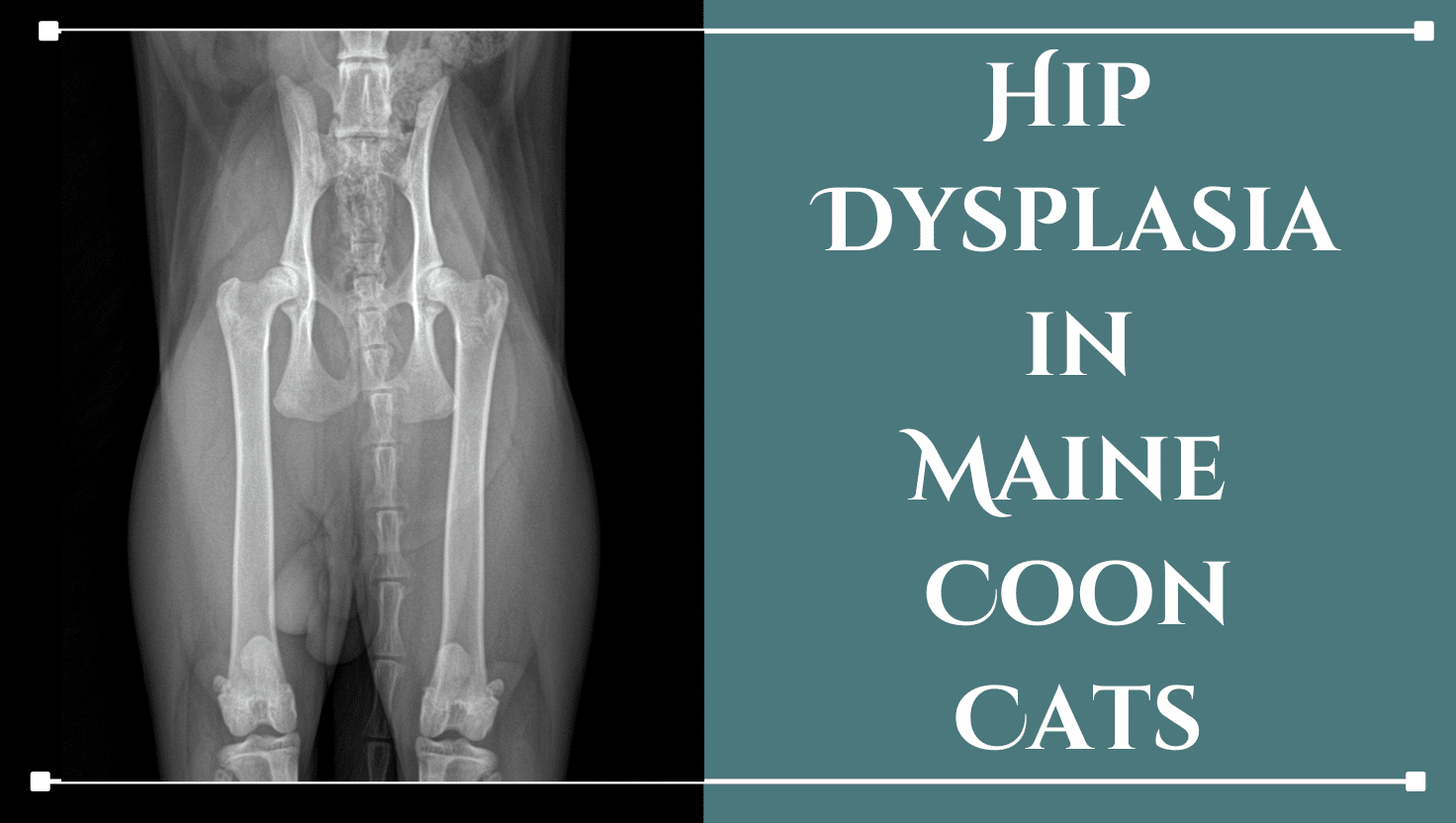
Hip dysplasia in Maine Coons sounds scary. However, once you understand it, you can make smart choices for your Maine Coon’s long-term health. As a breeder, I see the whole spectrum. Some cats have borderline hips that never bother them. More advanced cases need lifelong support. So let’s break it all down in a simple, human way.
What Is Hip Dysplasia in Maine Coons?
Hip dysplasia (HD) is when the hip joint doesn’t form the way it should. The ball and socket don’t fit together smoothly, so the joint gets loose. Over time, that looseness leads to arthritis, pain, and reduced mobility.
Hip Dysplasia is more common in large-bodied breeds like Maine Coons. Their bone structure is bigger and heavier than the average house cat.
How Common Is Hip Dysplasia in Maine Coons?
In the Maine Coon breed, hip dysplasia is more common than people realize. A study was done through data collected by the Orthopedic Foundation for Animals. There were 2,708 Maine Coons involved in the study. This is the largest demographic study of Feline Hip Dysplasia that has been published.
The majority of the x-rays were performed between the ages of 4 months old and 5 years old. The overall prevalence of feline hip dysplasia was 24.9% and was slightly higher in males [27.3%] than females [23.3%]. Bilateral cases had more severe dysplasia than unilateral.
The Genetic Factor of Hip Dysplasia
Hip dysplasia has a strong genetic component. It’s polygenic, which means more than one gene influences it. It’s also affected by environment and development. If both parents have normal or “excellent” hips, the chance of severe dysplasia drops dramatically.
If one or both parents have borderline or dysplastic hips, the risk increases. Selective breeding helps reduce the odds, but it can never eliminate the risk entirely.
- Two normal parents → low risk
- Normal x borderline → moderate risk
- Borderline x borderline → higher risk
- Borderline x dysplastic → very high risk
Other Factors That Can Cause or Worsen Hip Dysplasia
Genetics isn’t the only culprit. There are lifestyle and developmental factors that can make hip dysplasia worse:
Rapid growth (very common in Maine Coons)
Extra weight or obesity – be sure to monitor your cats’ weight and body condition score.
Poor muscle development
High jumps during growth – we use 36″ or smaller cat trees while our kittens are growing up. Once they reach 6 months of age, they can have taller trees.
Symptoms of Hip Dysplasia in Maine Coon Cats
As I mentioned earlier, most Maine Coons won’t show any signs of discomfort – especially with mild hip dysplasia. They’re able to hide discomfort well, but you may notice one or more of the following symptoms if the dysplasia is bothering them:
- Bunny-hopping gait
- Avoiding high jumps
- Difficulty going up stairs
- Stiffness after sleeping
- Trouble grooming the back end
- Less interest in play
- Sensitivity when you touch the hips
- A narrow or swaying back end
Presentation of any of these symptoms doesn’t mean a hip dysplasia diagnosis.
If your cat is showing any of these signs, schedule an appointment with your vet.
OFA (Orthopedic Foundation for Animals)
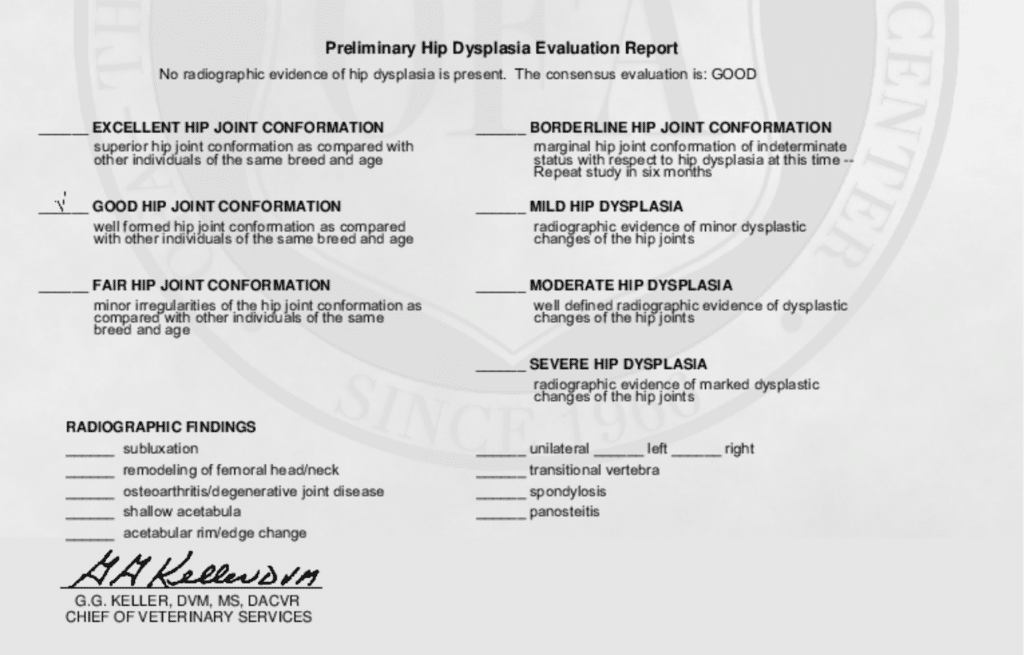
OFA is the most widely recognized hip grading system in the U.S. This is the organization most breeders are referring to when they say “hip certified.” They review X-Rays that are taken by a licensed veterinarian, with very specific positioning standards. OFA is the gold standard for breeding decisions. If a breeder uses only one system, the OFA is the most meaningful.
A board-certified radiologist reviews the study, and assigns an official hip grade. Each grade reflects how well the ball sits in the socket and whether arthritis is present. Anything from Excellent to Fair is considered normal.
How OFA Grades Hips
- Excellent
- Good
- Fair
- Borderline
- Mild Dysplasia
- Moderate Dysplasia
- Severe Dysplasia
How Is Hip Dysplasia Diagnosed?
Hip dysplasia can only be diagnosed with hip X-rays, usually taken under sedation. A physical examination is not enough. Hip positioning is everything when it comes to diagnosing hip dysplasia in Maine Coons. A perfectly healthy cat can look dysplastic on a bad x-ray. OFA has strict guidelines for positioning the cat to accurately assign a grade.
If the cat isn’t positioned correctly, then the image can make the hips look looser than they are. It can hide joint laxity. It can also change the apparent depth of the socket. Any of these can affect the final grade.
Correct Positioning for X-Rays
Correct positioning for a hip evaluation includes the following:
The cat must be on their back with their spine straight and centered. The hind legs must be fully extended. The knees should be rotated slightly inward and the femurs need to be parallel. The tail has to be centered and straight.
This position stretches the hip joint and shows all of the details required for an accurate diagnosis. This is important for grading. even a few degrees off can change how the hip looks. Due to these requirements, your Maine Coon must be sedated to hold this position. Unsedated hip x-rays are not reliable for grading.
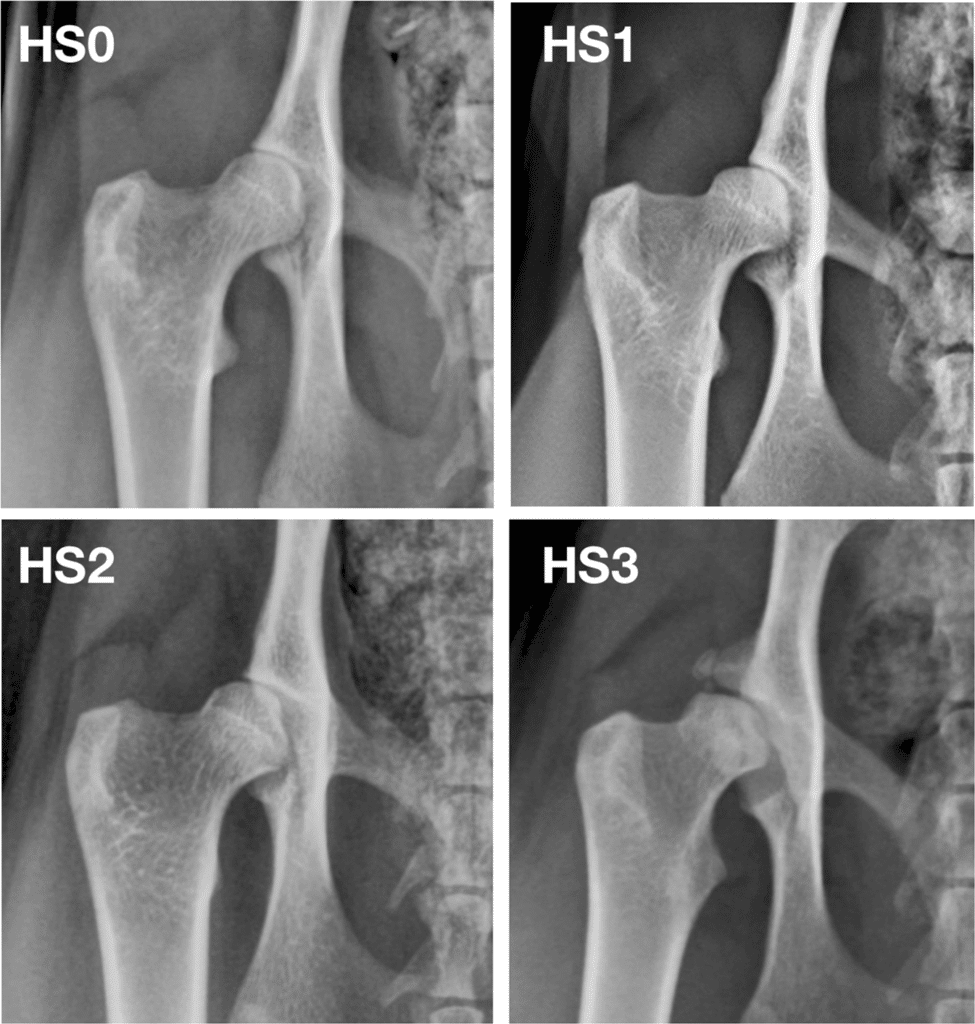
Below is an image taken from the PawPeds database, showing different grades of hip dysplasia. HS0 would be considered “Excellent” and HS3 is “severe”.
Does Sassy Koonz do hip testing on their breeding cats?
Sassy Koonz performs hip x-rays and OFA grading on all of our adult breeding cats. Using selective breeding and pairing, we constantly strive to reduce the occurrences of hip dysplasia. Read more about our health testing protocols for our Maine Coons.
Solutions & Management for Hip Dysplasia
There is no “cure,” but there are very effective ways to support comfort and mobility. The main rule of thumb is to hep your cat maintain a healthy weight. Extra pounds puts stress on the joints, which can be trouble for a kitty with dysplasia.
If you cat has mobility issues, then provide ramps and options for climbing that are lower than 36″ tall. Throw down some rugs if you have slippery floors, so that there is better traction.
Supplements That Can Help Hip Dysplasia
These help slow degeneration and support joint health and inflammation:
- Omega-3 fatty acids (high quality fish oil)
- Glucosamine + chondroitin
- MSM
- Green-lipped mussel
- Hyaluronic acid supplements
- Collagen
Medical Options
- Anti-inflammatory medications
- Pain management (when needed)
- Laser therapy
- Acupuncture
- Physical therapy or hydrotherapy
Surgical Options
Most Maine Coons with Hip dysplasia never need surgery. But in the event your Maine Coon has severe hip dysplasia, the two most common procedures are:
- Femoral Head Ostectomy (FHO) – removes the ball of the hip joint
- Total Hip Replacement – rare for cats but possible
What’s the Outlook for a Maine Coon With Hip Dysplasia?
For most cats, the prognosis is very good. With early diagnosis and simple lifestyle support, they can live long, comfortable lives.
Final Thoughts
Hip dysplasia can feel overwhelming, but with the right knowledge, you can make confident choices. Whether you’re bringing home a new Maine Coon kitten or caring for a senior cat, you should understand the condition. This helps you support your cat in the best way possible.
If you’re adopting from a responsible breeder, always ask about OFA hip evaluations. Good breeding practices and proper screenings don’t eliminate dysplasia completely. They do lower the chances and help protect the future of this incredible breed.
Discover more from Sassy Koonz Maine Coon Cattery
Subscribe to get the latest posts sent to your email.


